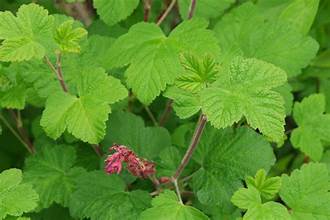
This month’s featured native: red flowering currant (Ribes sanguineum)
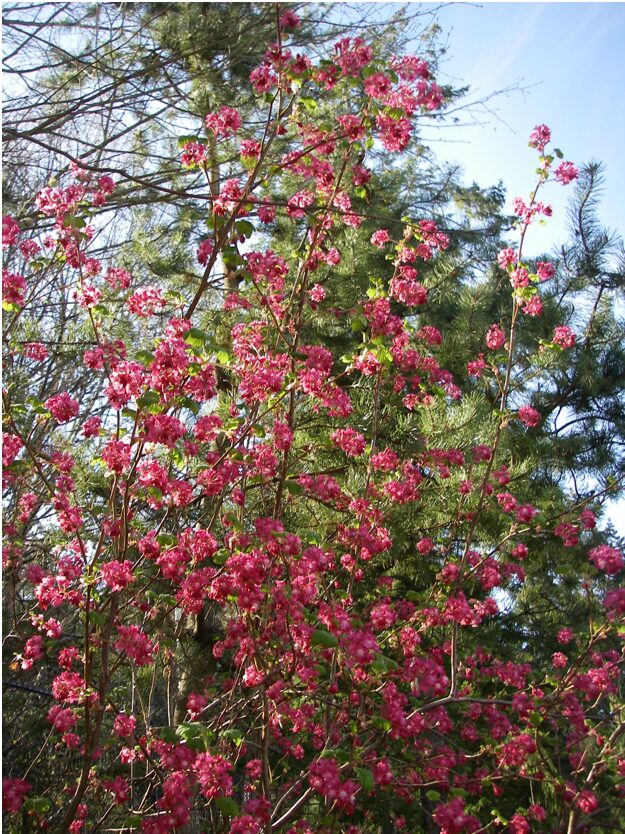
Early bloomer, superbly showy, hummingbird favorite–all of these are great descriptors for red flowering currant, which is on full display in our area at this time of year. A deciduous shrub reaching up to 3 m (10′) in height, with smooth, unarmed bark and distinctly 5-lobed leaves shaped like butterflies, this garden beauty is lovely even without its flowers. Blooms are in drooping clusters of 10-20 flowers, and can vary in color from the eponymous red (Latin “sanguineum” = blood-red) to pale pink to (occasionally) white, typically appearing in very late winter or early spring and lasting 1-2 months. With such attractive flowers, pollination is all but guaranteed, and the blue-black fruits, while rather bland, are edible.
Red flowering currant is typically found in dry, open woodlands. It is very drought-tolerant, needing little care once established, and will not generally sucker or run, making it an ideal addition to a garden space with decent drainage and good sun exposure. Hummingbirds adore the tubular flowers, which are also an important food source for early-emergent queen bumblebees, as well as other pollinators. The fruits are food for many different bird and mammal species, and the plant itself provides good cover and habitat. And what better announcement of spring could there be than red flowering currant’s explosion of magenta blossoms?