Written by Jennifer Hamilton
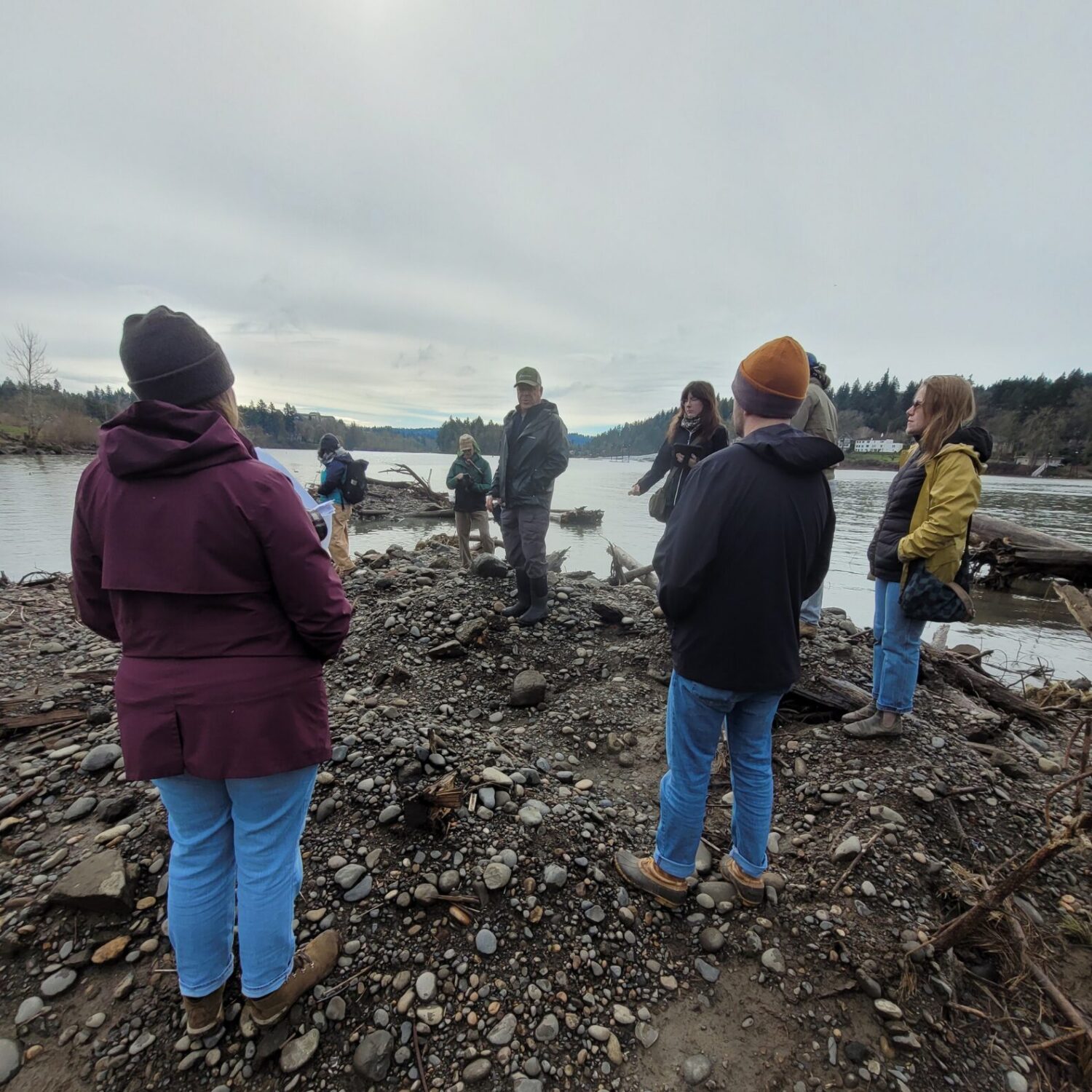
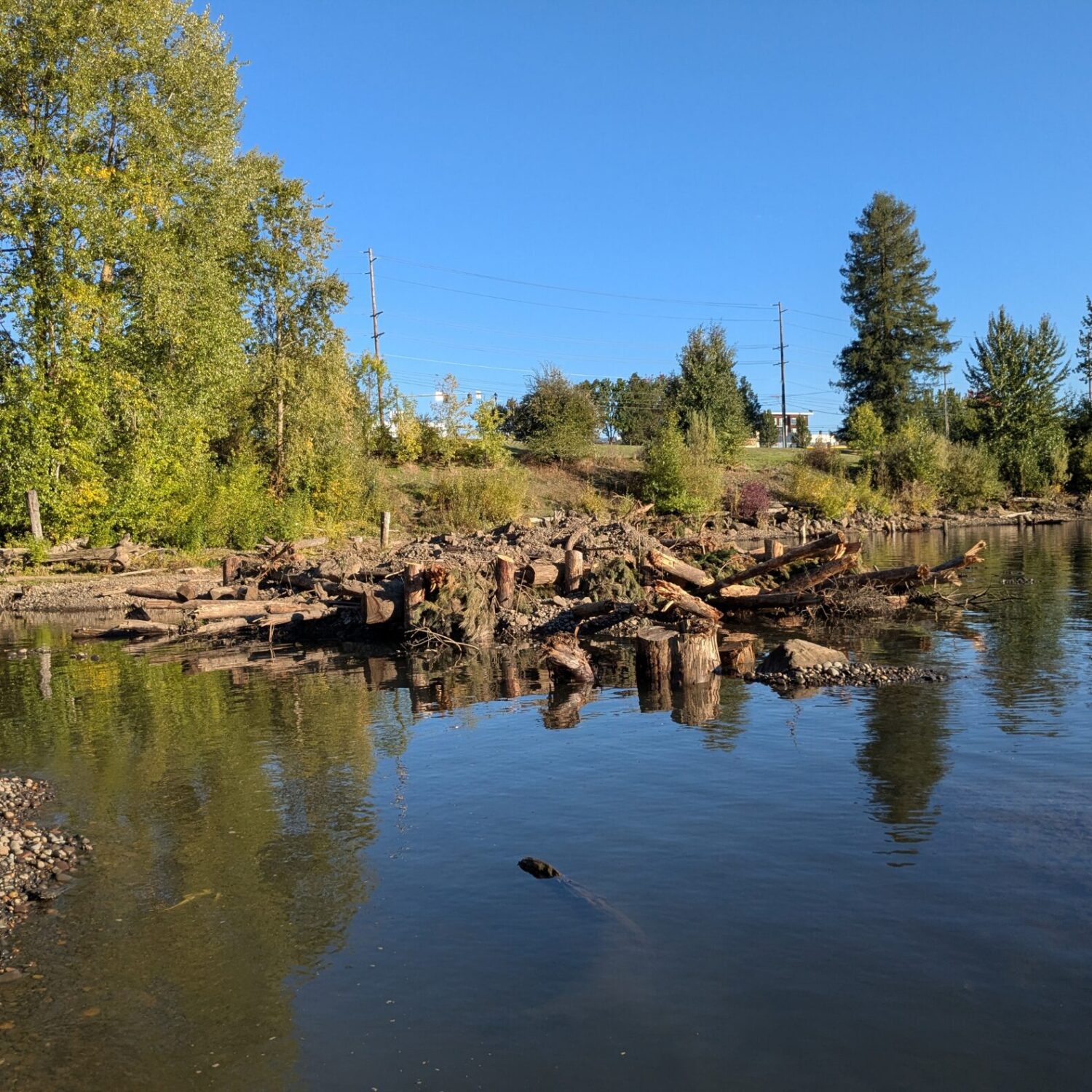
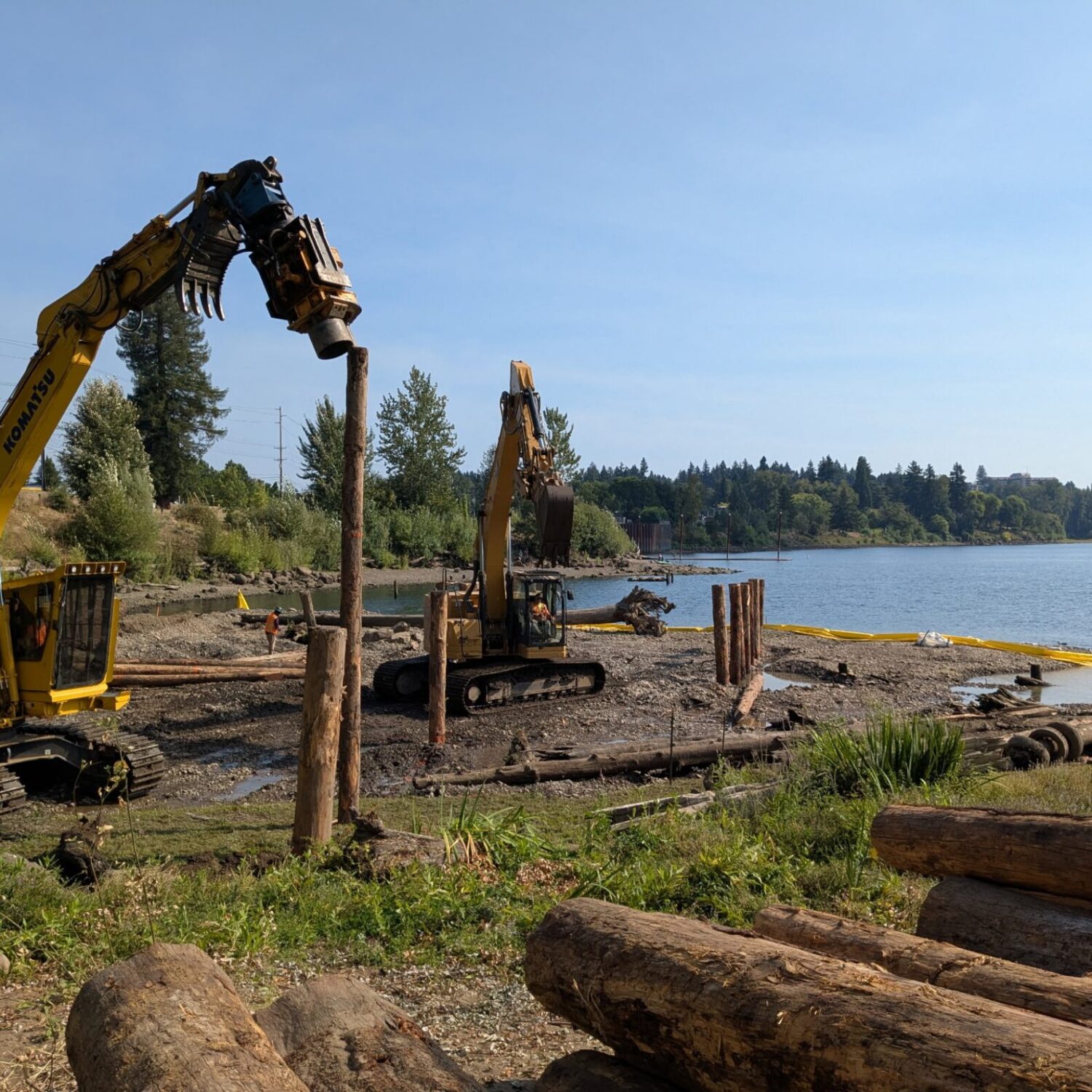
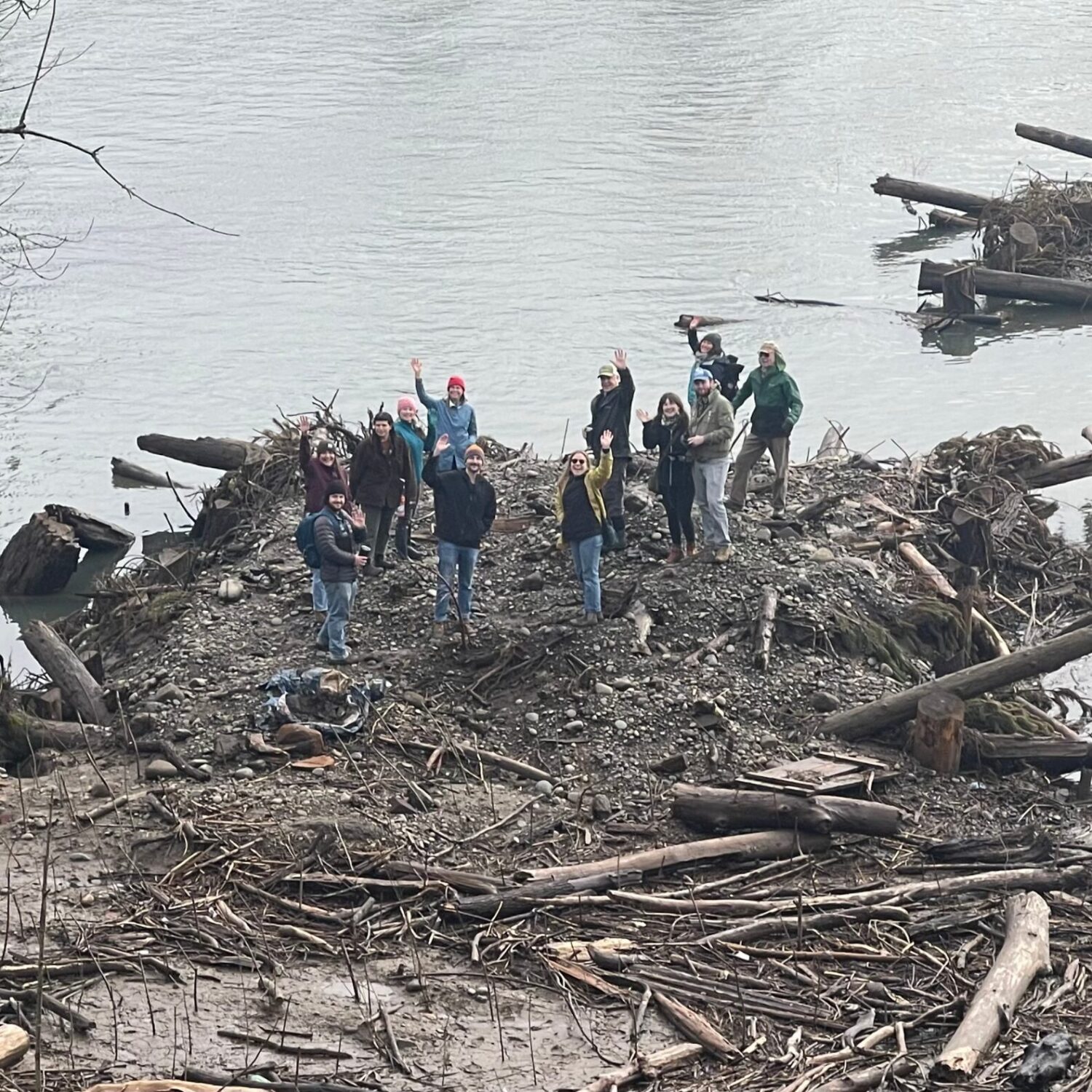
This weekend I joined a group of watershed and salmon enthusiasts for the Society for Ecological Restoration Northwest Chapter’s tour of one of the Johnson Creek Watershed Council’s most complex salmonid habitat restoration project sites. Led by Biohabitats Construction’s Todd Alsbury, lead construction manager for the project, we enjoyed an up-close look at one of the large wood complexes. Participants learned that the project includes 220 logs, 250 tons of boulders and cobble, and hundreds of native trees, shrubs, and plants.
Located at the confluence of Johnson Creek and Milwaukie Bay, this area is critically important to salmon and steelhead populations – especially spring Chinook. Lower Johnson Creek serves as a cold-water refuge and an important rearing area for fish that leave their natal streams early to rear in the more productive lower Willamette River. There is very little of this type of habitat left in the lower Willamette, making areas like lower Johnson Creek disproportionately valuable.
Thanks to supportive landowners like Gary and Sharon Klein, we are able to implement restoration actions that reconnect floodplain habitat, increase channel complexity, and create the slow-water refuge juvenile salmonids need to survive and thrive.
We are also grateful to the design engineers at Wolf Water Resources, whose technical expertise helped bring these complex habitat features to life, and to our funding partners at the National Oceanic and Atmospheric Administration (NOAA) and the Oregon Watershed Enhancement Board (OWEB) for making this work possible. Partnerships like these demonstrate how collaborative stewardship can restore ecological function while strengthening community connections to our incredible watershed.