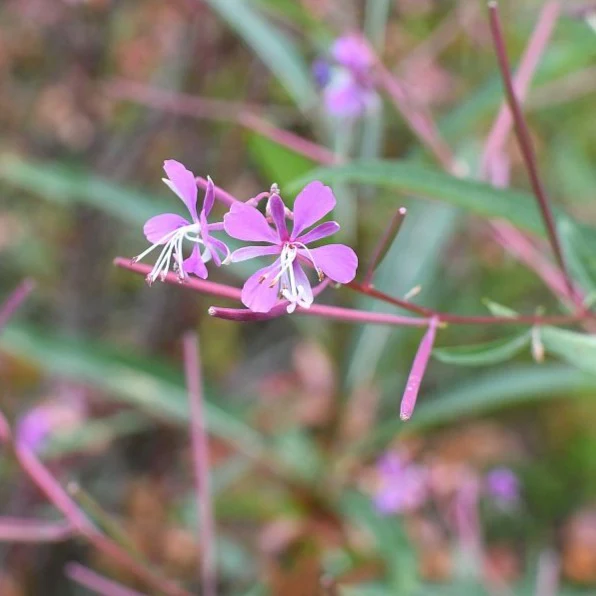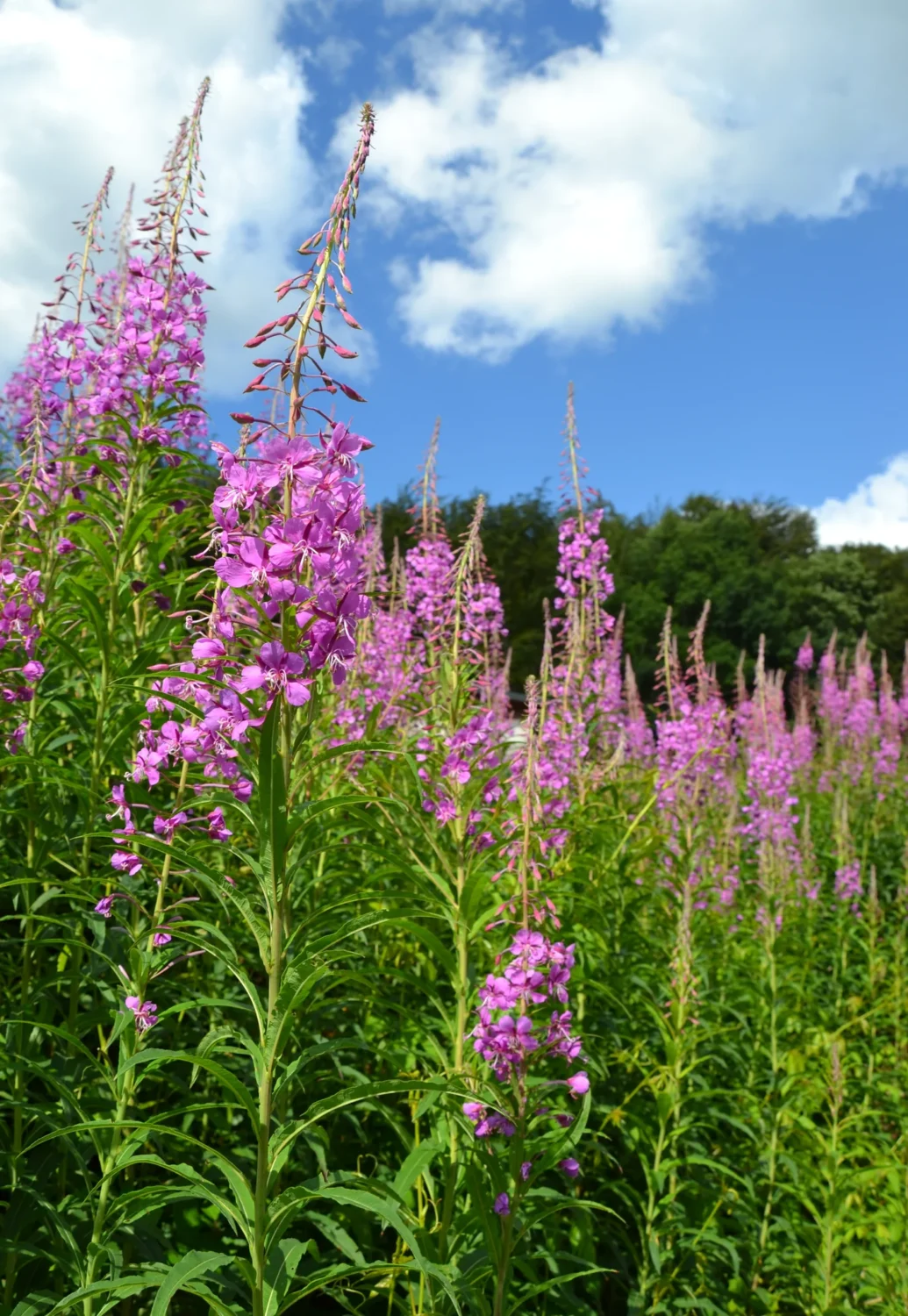
Aptly named for its tendency to pop up in burned areas, this month’s featured species is an eye-catcher: fireweed (Chamaenerion angustifolia) sports columns of magenta-pink flowers at the top of a stem that can reach more than 2 m (6 ft) in height. This rhizomatous perennial in the evening primrose family (Onagraceae) also features stout, reddish stems and alternate, willow-like leaves up to 20 cm (8 in) long. The showy flowers have four petals, each up to 2 cm (0.8 in) long; four narrow sepals; and 8 prominent stamens; they bloom throughout most of the summer. The fruit is a slender capsule containing many seeds, each tipped with a tuft of white hair to help carry it away on the wind.
Fireweed reproduces both by seed and rhizomes. Like many early-succession plants, fireweed grows best in full to part sun, in moist to dry soil. It is drought-tolerant once established. Fireweed has a very broad native range throughout the Northern hemisphere, from 25 to 70 degrees latitude and from sea level to 15,000 ft in the Himalayas!
In addition to being lovely and easy to grow, fireweed is also a habitat powerhouse. Its nectar provides food for hummingbirds, adult butterflies, bees, and other insect pollinators; new shoots and/or leaves are a preferred food source for deer, moose, caribou, muskrat, and rabbits as well as larval native butterflies and moths; and it’s a host species for several caterpillar species.