
In the world of eye-popping color that is this area’s plant palette, this month’s featured native is an easy one to overlook. Perhaps the late bloom time of pearly everlasting (Anaphalis margaritacea) gives it more of a chance to be noticed. This clumping perennial member of the aster family (Asteraceae) features alternate, two-toned leaves about 10 cm (4 in) long, whose woolly undersides match the stems of the plant. Standing upright at up to 60 cm (2 ft), pearly everlasting produces 10-30 flowers in clusters atop its stems. Pearlescent white bracts are packed tightly around a small head of golden disc flowers; each flower is roughly 1 cm (<1/2 in) across. As the common name implies, these persist, remaining dried on the plant for months after blooming. providing an important late- and post-growing season food source.
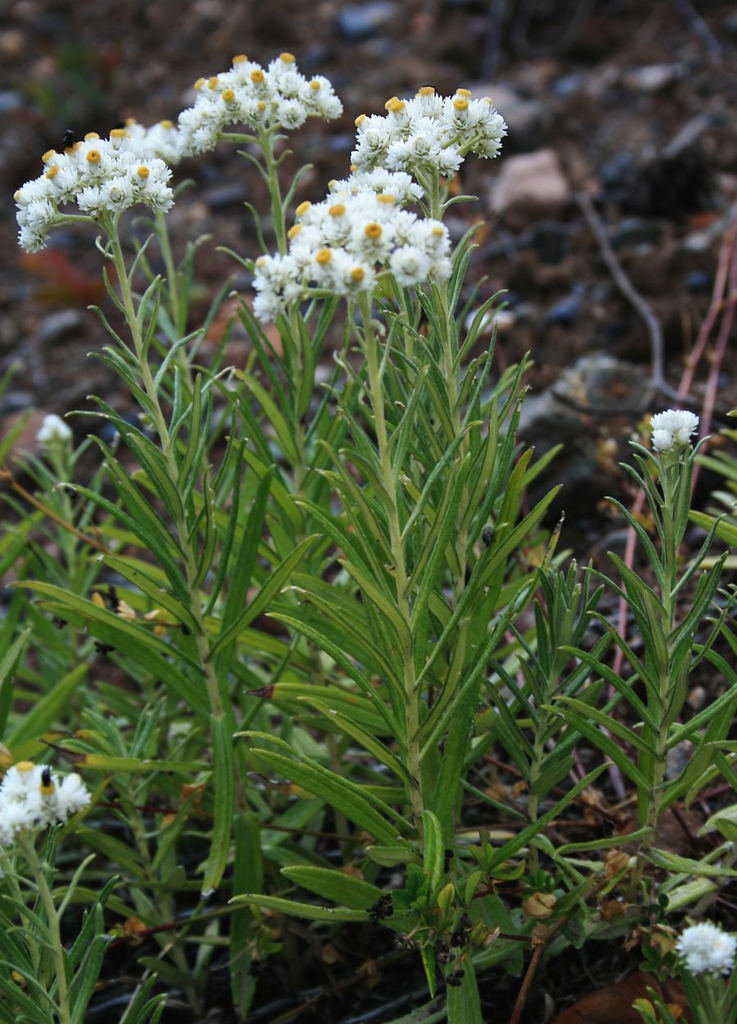
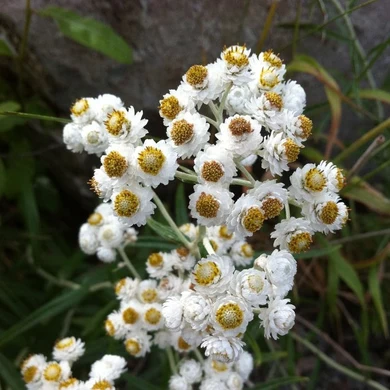
Pearly everlasting reproduces both by seed and rhizomes, and grows best in full to part sun, in moist to dry soil. It is drought-tolerant once established. It is widely distributed across North America, as well as much of Asia and Europe, and can be found in a variety of habitats, including meadows, grassy hillsides, disturbed sites, streambanks, rock outcrops, and roadsides,
Blooms of pearly everlasting provide nectar for adult butterflies, bees, and other insect pollinators; it is the host species for painted lady and skipper butterflies.