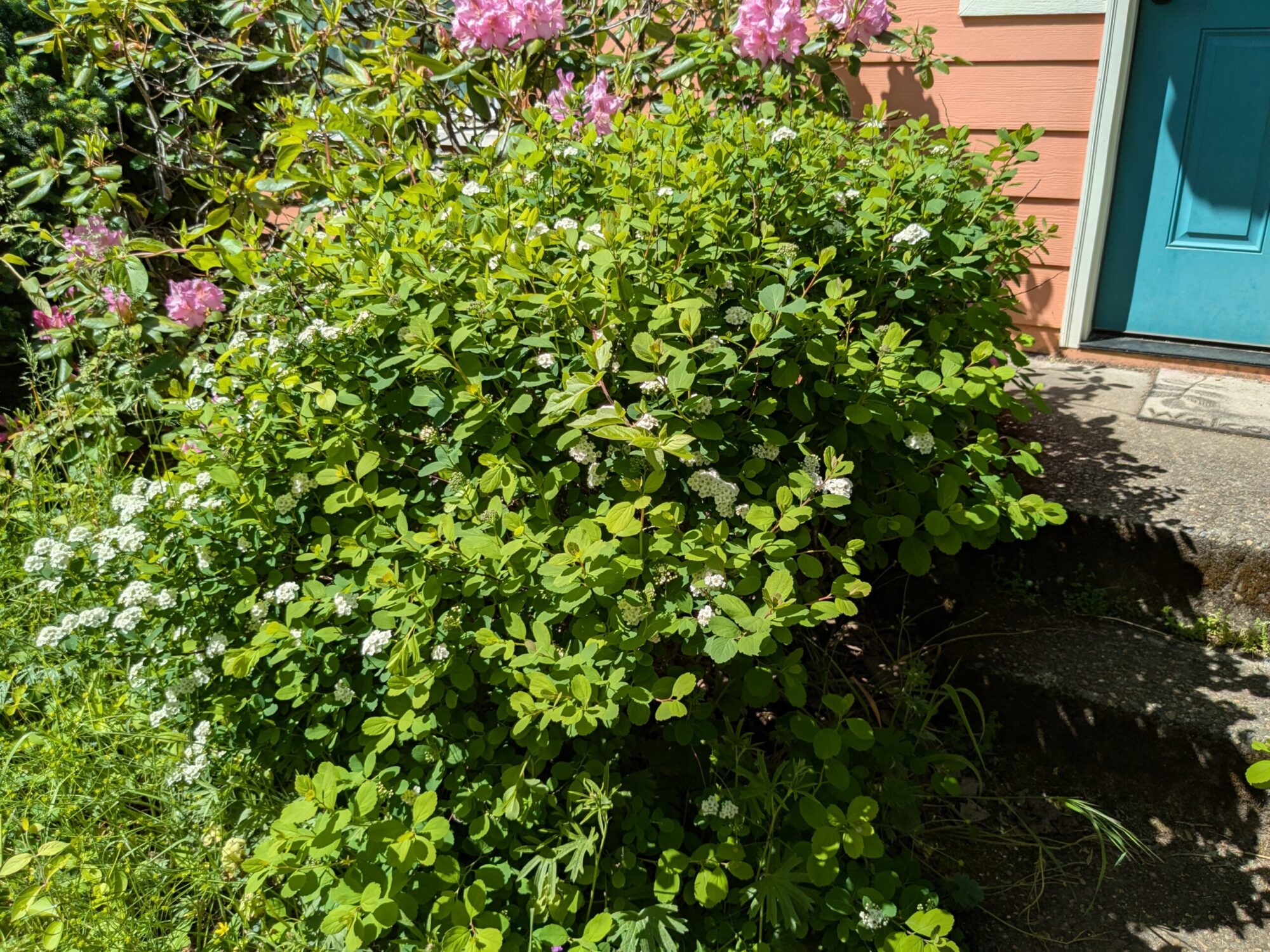
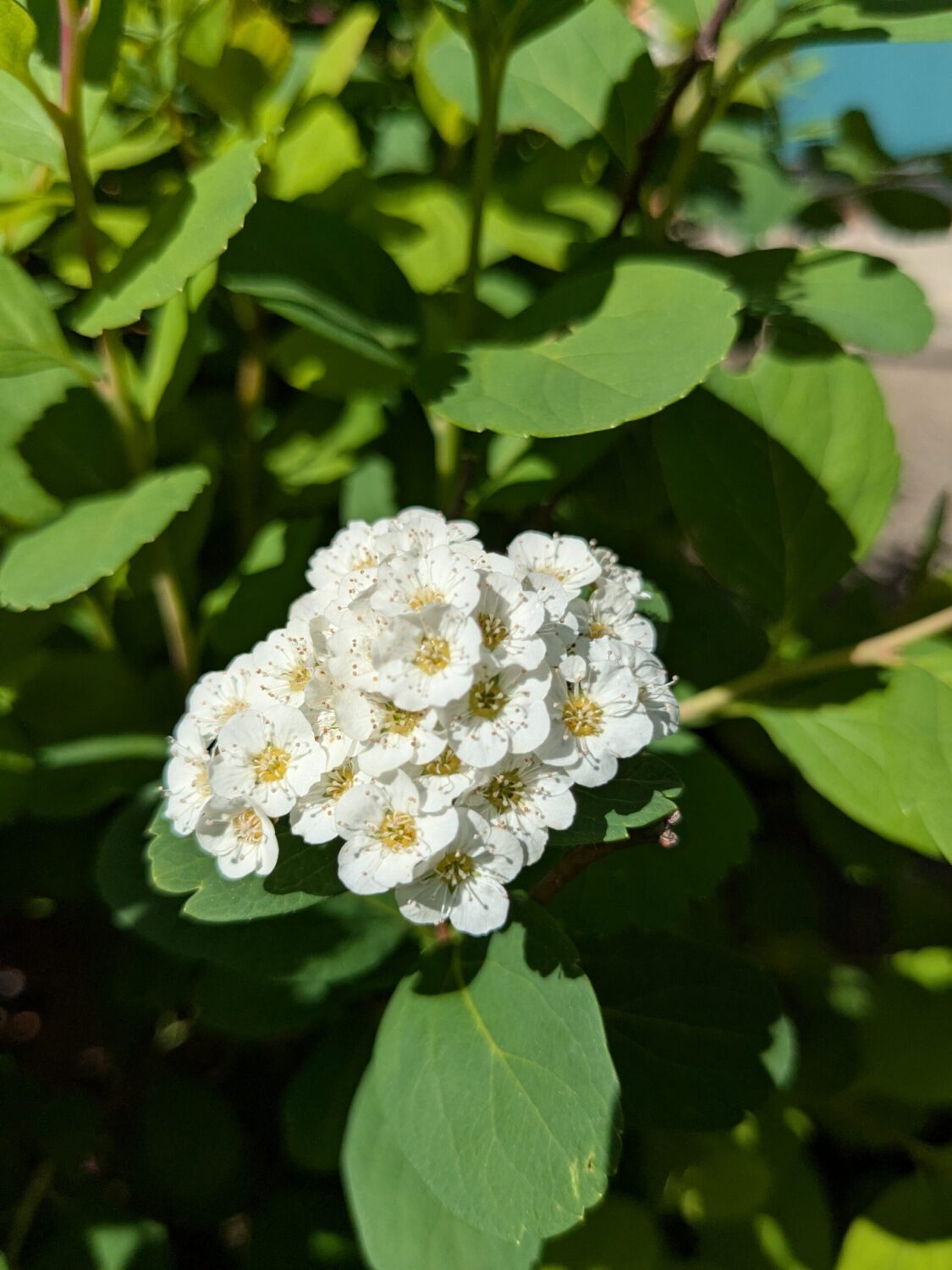
This month’s featured native: Birch-leaf spirea (Spirea betulifolia)
Birch-leaf spirea is, in many ways, an ideal garden native: compact, showy, easy to grow, and ecologically beneficial. A deciduous shrub generally not much more than 1 m (3 ft) in height and equally wide, it’s an easy one to squeeze into tight spaces. The leaves are egg-shaped, up to 7.5 cm (3 in) long; margins are toothed at the ends, but smooth near the base of the leaf. They take on gorgeous fall color, featuring rainbow hues of yellow, red, orange, and even purple. Mildly fragrant clusters of white or pink-tinged flowers emerge in mid- to late spring, each five-petaled and about 6 mm (1/4 in) across. These last for several months, persisting as attractive dried flowers until they are succeeded by golden-brown seeds.
Birch-leaf spirea, unlike its more-common cousin Douglas spirea, prefers well-drained soil, from dry to seasonally wet. It will grow well in full or part sun. While it has a fairly wide native range (British Columbia south to Oregon, and eastward to Saskatchewan and Minnesota), it is somewhat uncommon. It can be found in a variety of habitats, including lake edges, meadows, forest clearings and edges, and even rocky slopes and outcroppings.
In addition to its aesthetic value, birch-leaf spirea can provide cover for birds and small mammals, while its flowers provide nectar for a broad coalition of pollinators and beneficial insects, including adult butterflies, bees, and moths. Tuck it into a sunny nook, and you’ll get outsize delight throughout the growing season!