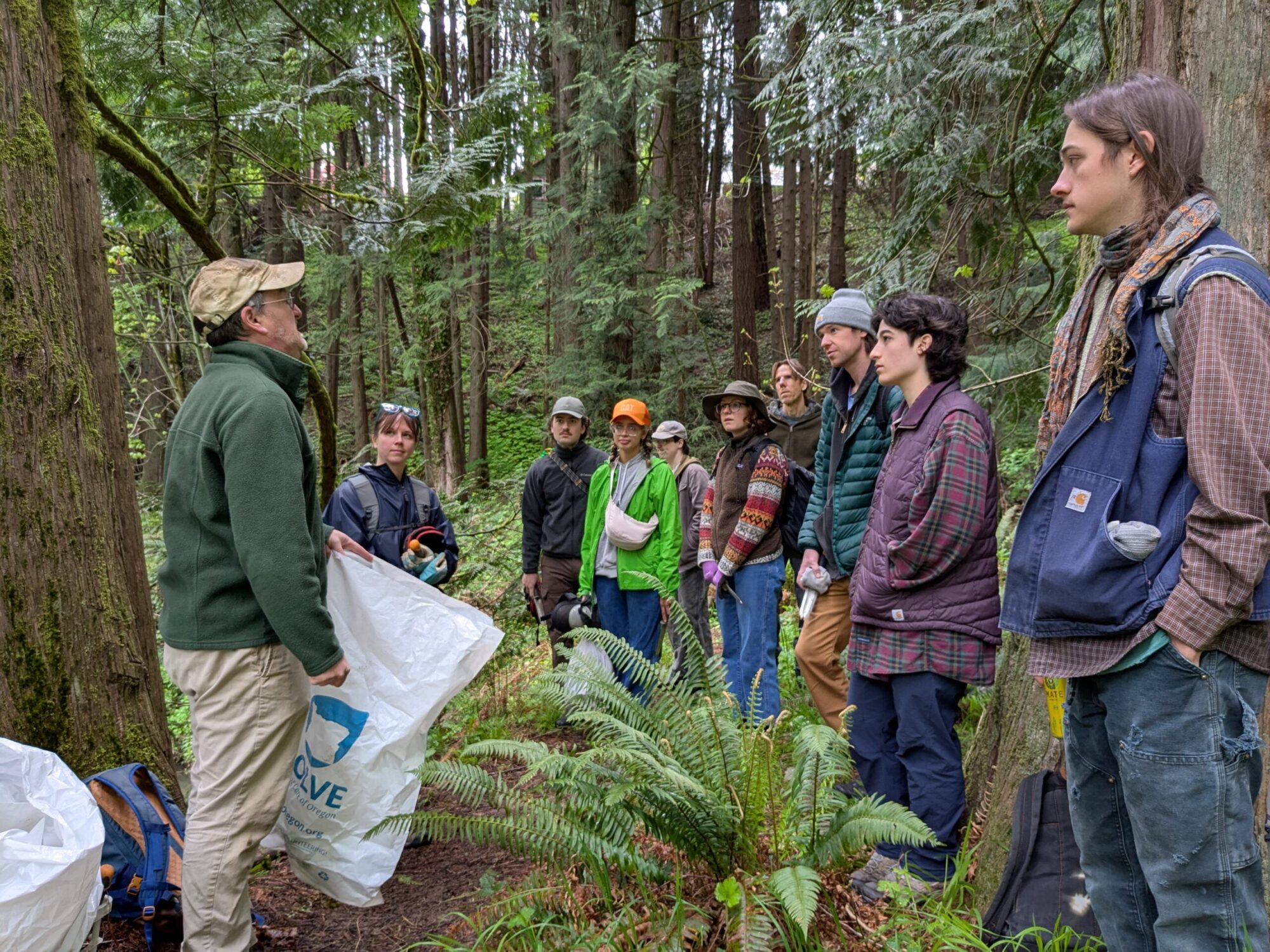
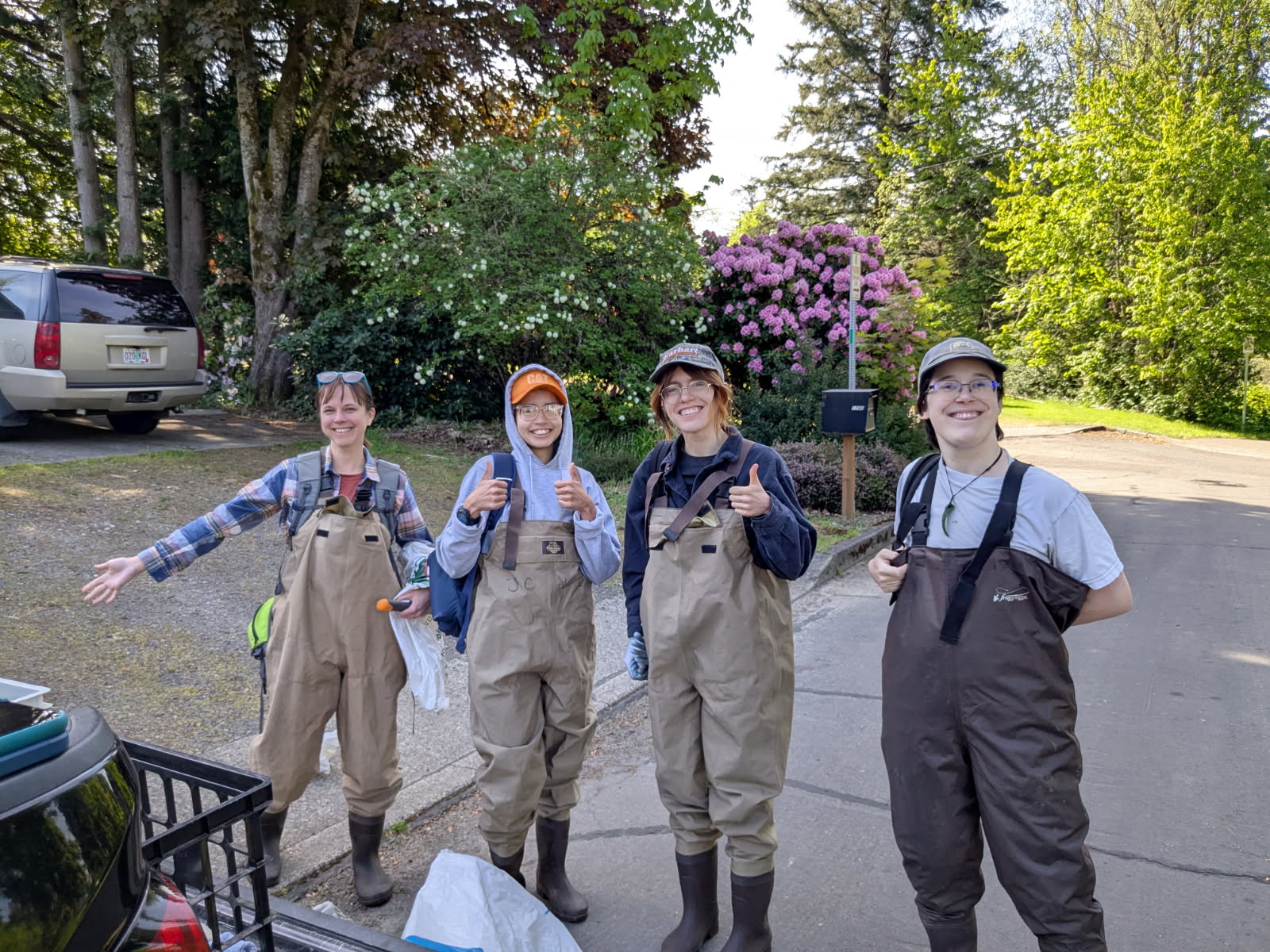
For the eleventh year running, JCWC has brought on a group of interns to tackle garlic mustard (Alliaria petiolata), an introduced plant from the Mediterranean region that poses a threat to Pacific northwest ecosystems. This year looks a little different in three ways: first, we’ve added mainstem Johnson Creek in Gresham to our efforts for survey and treatment, as City of Gresham staff have seen garlic mustard cropping up on properties they manage and want to understand (and reduce!) its distribution. Second, another introduced species–small-flowered touch-me-not (Impatiens parviflora)–has been added to our target list. Finally, because of these additions, we’ve brought on more interns than ever before–11, to be exact! After initial field orientations–one to ID garlic mustard, and another to learn the survey protocol and ID the Impatiens–these good folks have diligently set out to find and control these two species along Johnson Creek and its tributaries. Since beginning this effort in late April, we’ve covered Johnson Creek from SE 142nd Ave down to the Brookside wetlands off SE 111th in Portland, as well as from Palmblad Rd to Walthers Rd in Gresham! We’ll keep going until we run out of time or plants, whichever comes first. Many thanks to Kathleen Cummings, Noah Gagliano, Jess Gustafson, Isaac Ison, Joy Lopes, Bird Loukides (back for an amazing 7th YEAR!), Shawn McMurtrey, Sam New, Dan Riley, Gillian Rutten, and Anna Stemach for their hard work, dedication to watershed health, and tolerance for nettle stings!