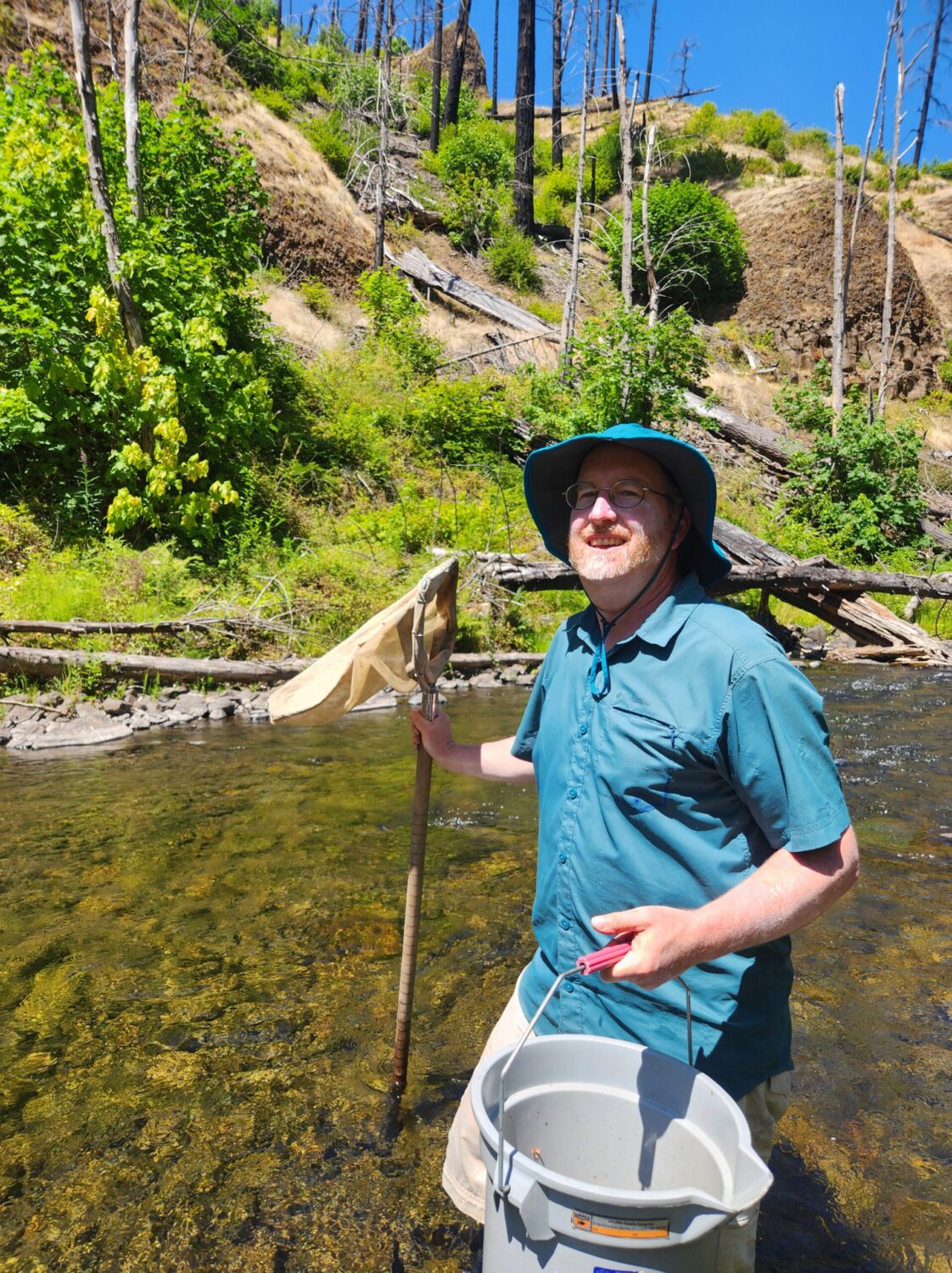
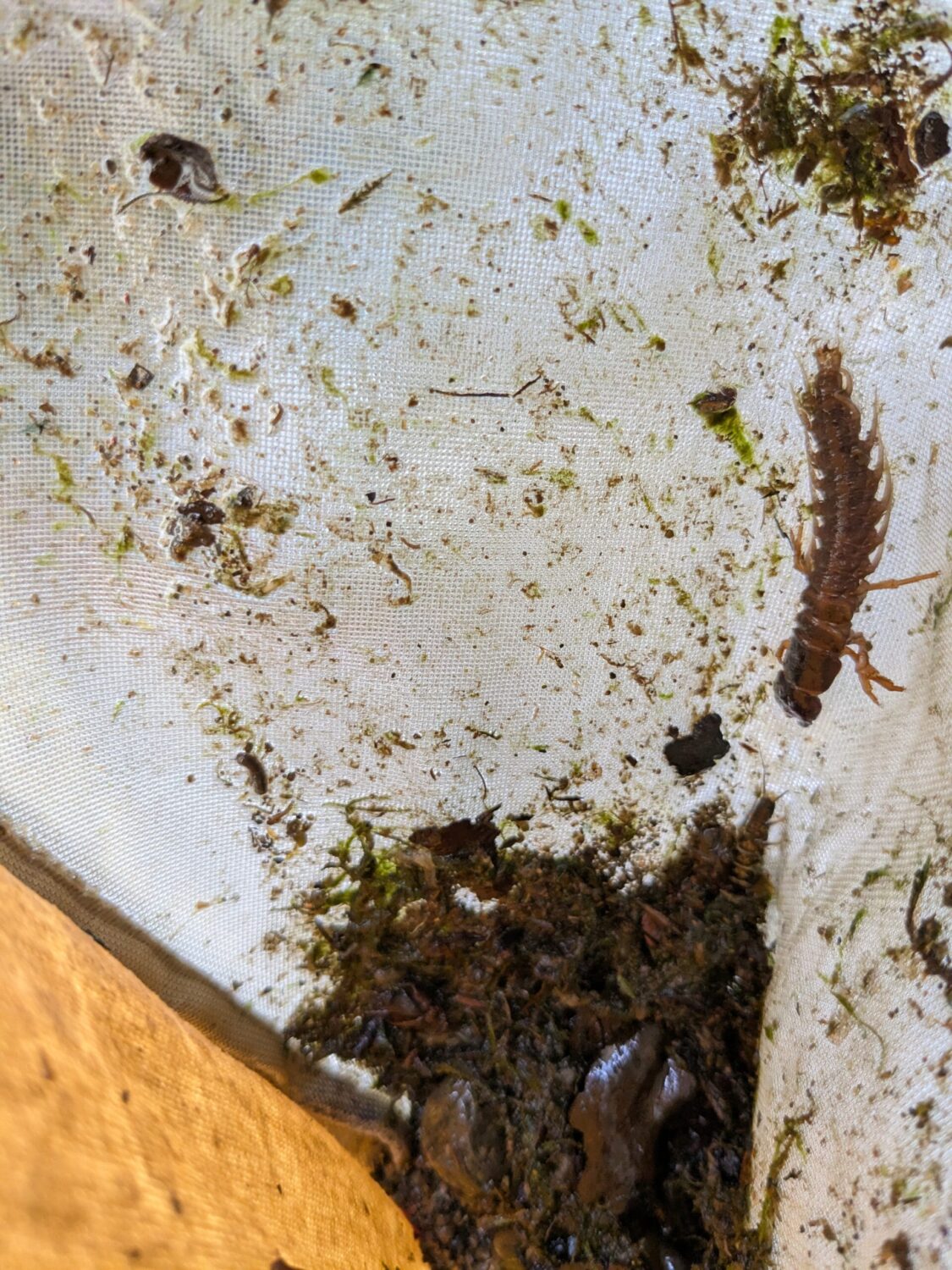
Let’s say you’ve got a site where you’re hoping to improve the health of a stream–by removing a dam, say, or adding large wood for habitat. How do you know if it’s working? One way to answer that question is to look at the insects that reside in the stream bed–the benthic macroinvertebrate community. What creatures you find, how many, and what you don’t see can say a lot about habitat quality. Strap on the chest waders–let’s hunt some bugs!
A local consortium of watershed councils (including JCWC), jurisdictional partners, and tribal organizations–the Clackamas Partnership–has been implementing in-stream habitat projects since 2020, using funding received from the Oregon Watershed Enhancement Board. The Partnership has completed, or is planning, projects at 26 sites in several local watersheds, including Johnson Creek, Abernethy Creek, the Clackamas River and its tributaries, and the confluences of a couple of other local waterways with the Willamette River. Part of the funding from OWEB pays for pre- and post-project macroinvertebrate sampling at these sites, as well as at associated reference locations. Altogether, we’ve sampled at 46 sites, many of these for multiple years.
What’s sampling look like? Basically, a net, a bucket, a sieve, some jars, and sample preservative. At each site, you’ll take eight “net sets,” where the net is placed facing upstream and the bottom of the stream gets rubbed, kicked, and otherwise agitated to knock any resident bugs into the net. Whatever you net goes in a bucket of water, where you get a little chance to see if there’s anything fun and/or anything that doesn’t belong; fish, lamprey, freshwater mussels, and big crawdads are excting finds, but need to go back in the stream! This is also a good chance to pull out rocks, twigs, green plant matter, and anything else that might dilute or grind up your sample. Once you’ve picked through things, what’s in the bucket goes through the sieve to strain off water and fine sediment; what’s left behind goes into the jars. Sadly, the information we’re trying to get here requires “destructive sampling:” because we need to identify the insects to species, which requires looking at them through a microscope, the jars get filled with denatured alcohol to kill and preserve the specimens. Label the jars with relevant information, and voila! They’re ready to send off to a lab for identification. Many thanks to Mindy Allen for hours of peering through microscopes to tell us what we found!
Once we learn what’s there, our consulting entomologist, Zee Searles Mazzacano, tells us what it all means. What has six years of this work taught us? A few things: 1) Sites where projects have been completed had three times more significant changes to the macroinvertebrate community than those where projects haven’t been done yet; 2) Projects that change flow regime and/or rehabilitate channels–such as side-channel reconnections and dam removals–have the greatest impact; and 3) Most changes–at both restored and unrestored sites–indicated improved habitat conditions, showing that even impacted urban streams like these can recover with time and effort!