This month’s featured native: kinnickinnick (Arctostaphylos uva-ursi)
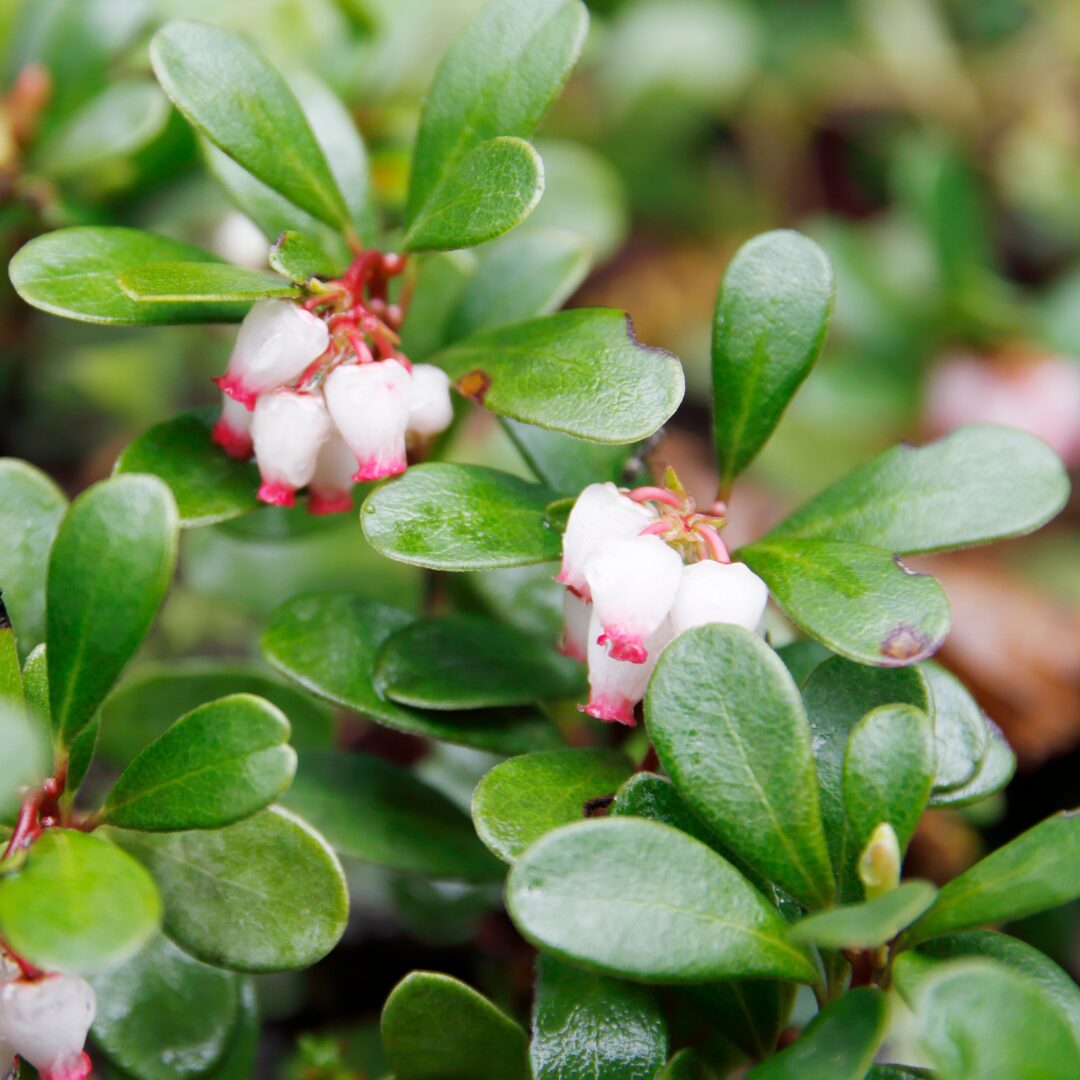
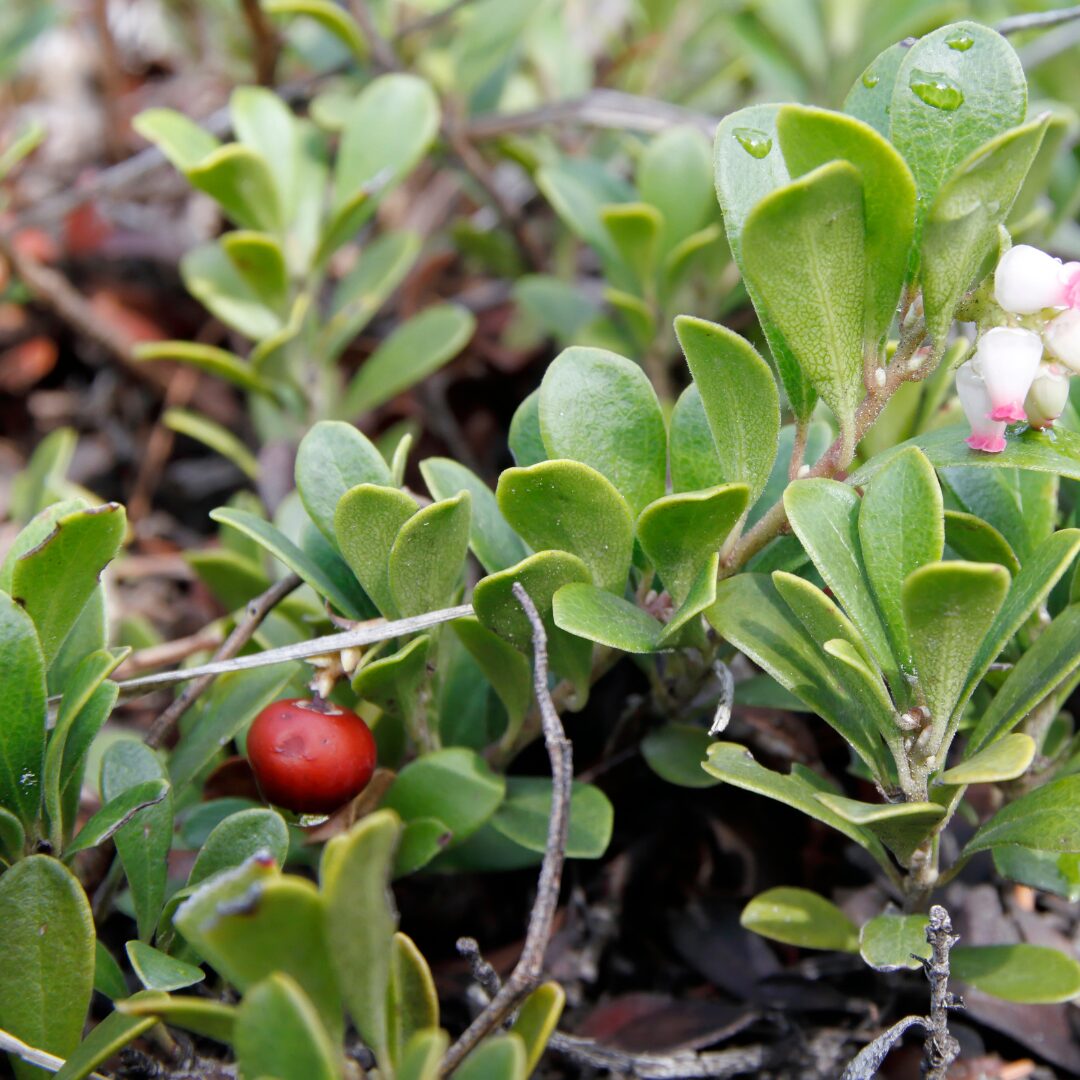
Kinnickinnick, also known as bearberry (more on that later), is a low-growing evergreen shrub in the heather family (Ericaceae). Generally growing no more than about 20 cm (8″) tall, it spreads along the ground to 2 m (6′) or more, forming a dense mat of rooting branches. Its leathery leaves are alternate, dark green on top and pale underneath, up to 3 cm (1 1/4″) long, and shaped like ovals or small spoons. Small, white-pink flowers shaped like inverted urns droop in terminal clusters; bright-red, edible (though generally rather bland) berries form after pollination, resembling tiny apples. These remain on the plant through the winter–a nice red-on-evergreen alternative to introduced holly!
Kinnickinnick prefers well-drained soils, exposed sandy areas and rocky slopes; it is drought-tolerant, fire-tolerant, and a good slope stabilizer. It is a circumboreal species, found throughout North America, Europe, and Asia.
The common name “bearberry” is apt here, not only because bears do indeed eat the berries, but due to the translation of the plant’s scientific name: the genus Arctostaphylos derives from the Greek arctos (“bear”) and staphyle (“bunch of grapes”), while the specific epithet uva-ursi is redundant Latin (uva = grape, ursus = bear). In addition to bears, the plant also supports hummingbirds, butterflies, bees and other insect pollinators, and provides food and habitat for a variety of garden beneficials.