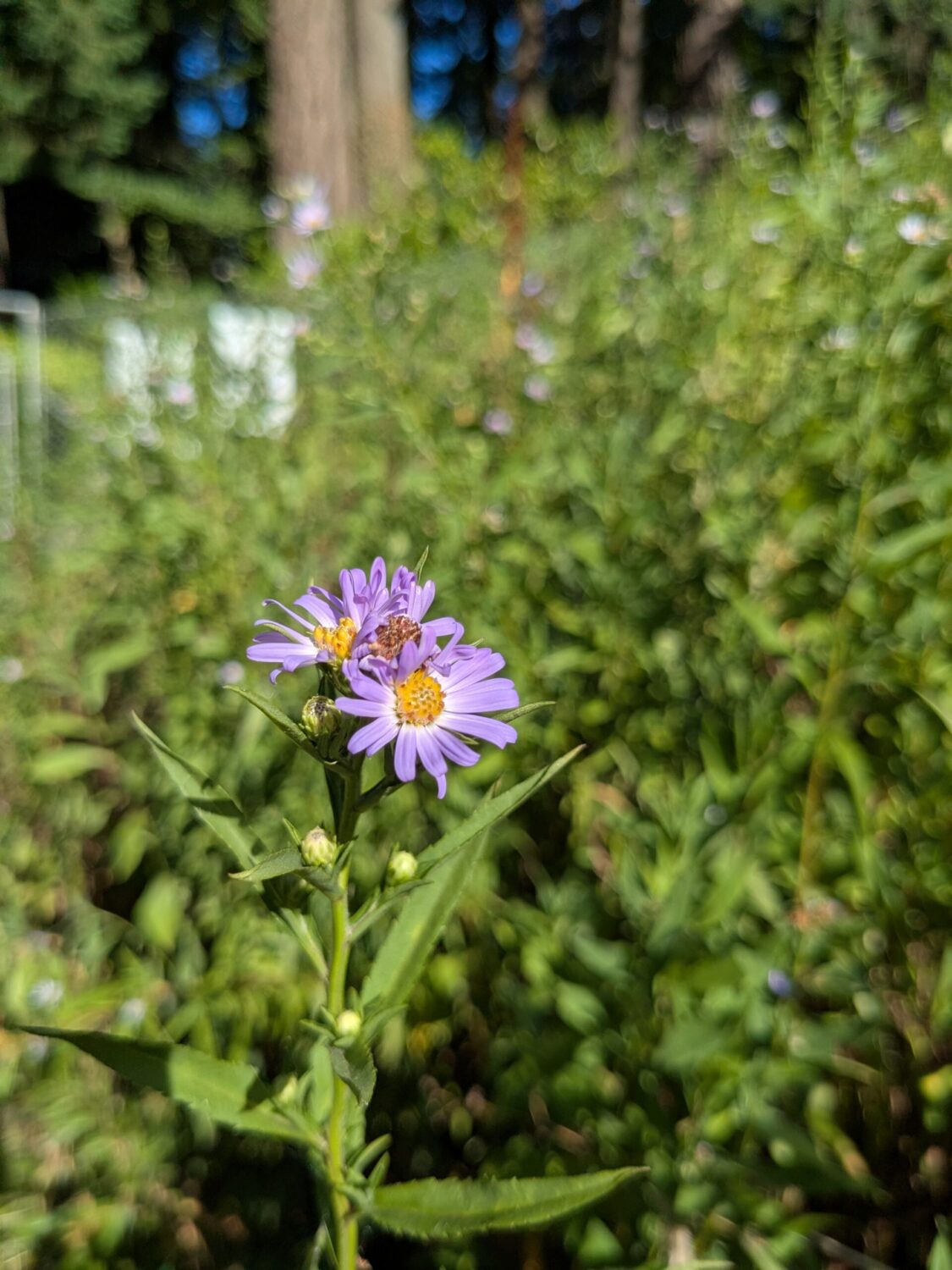
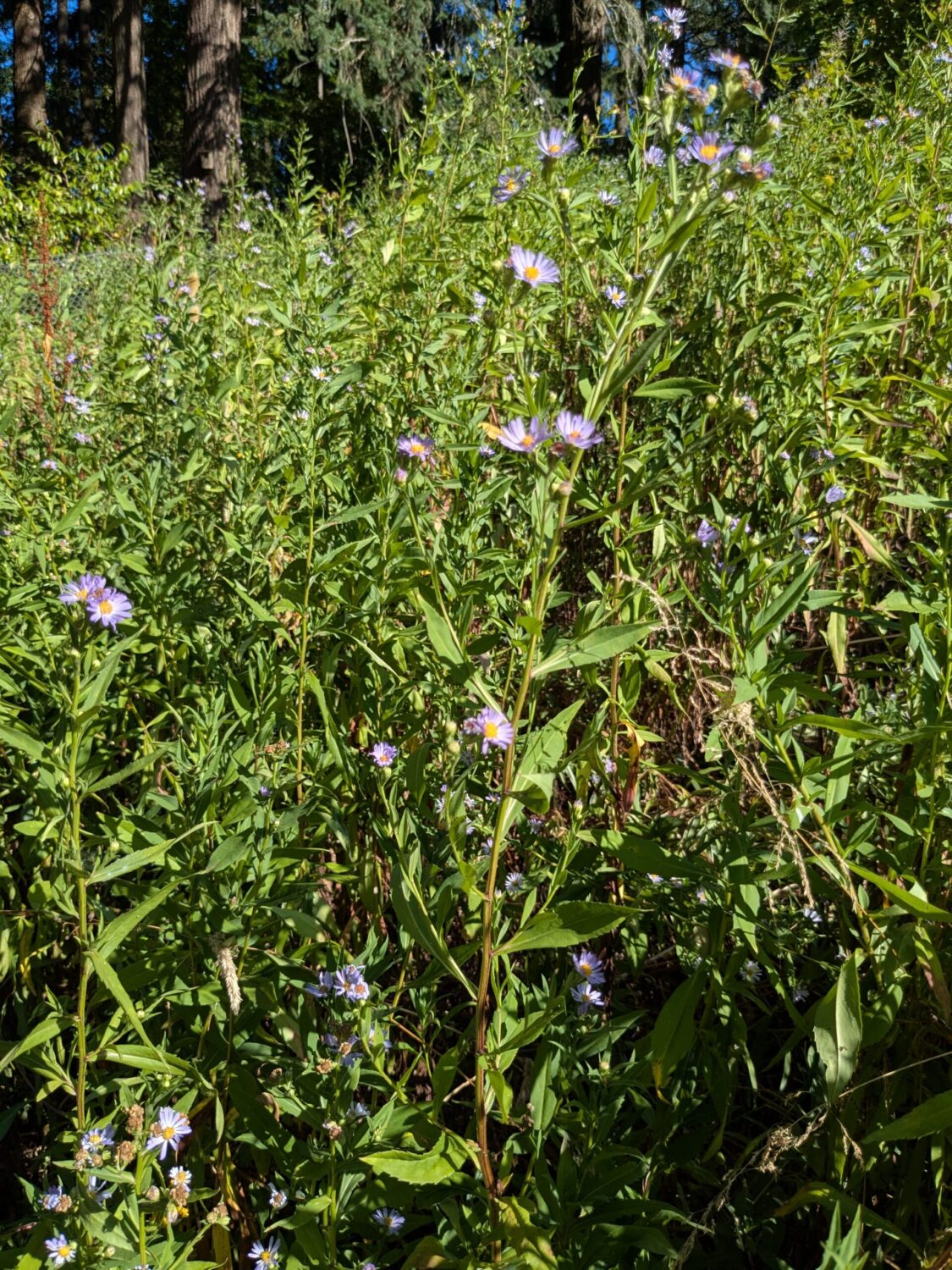
This month’s featured native: Douglas aster (Symphyotrichum subspicatum)
At a time of year when even many native species–adapted though they are to our long, droughty summers–are looking a bit worse for wear, along comes Douglas aster to perk up the native garden! A showy perennial up to 1.2 m (4 ft) tall, this month’s native plant produces unique flowers featuring purple rays surrounding a vibrant yellow disc (which turns red as the season goes on). The narrow, toothed leaves are up to 12 cm (5 in) long by no more than 3 cm wide; lower leaves are on petioles, while leaves further up the stalk are sessile. Plants produce one to many flowers in an open panicle July to September, providing a nice pop of color against the browning backdrop of a Pacific northwest summer. Douglas aster spreads–sometimes aggressively–by rhizomes, so expect to have more of it!
Douglas aster prefers well-drained soil, from dry to seasonally wet, and grows best in full sun. It requires very little care, so it’s a great plant for a forgotten/hard-to-access corner of the garden that can be “left wild.” It can be found in a variety of habitats, including meadows, streambanks, and even seashores–the salt doesn’t bother it.
In addition to its aesthetic value, Douglas aster will delight a huge array of pollinators and beneficial insects, including adult butterflies, bees, and hummingbirds. These creatures will thank you for giving them a late-season nectar source!