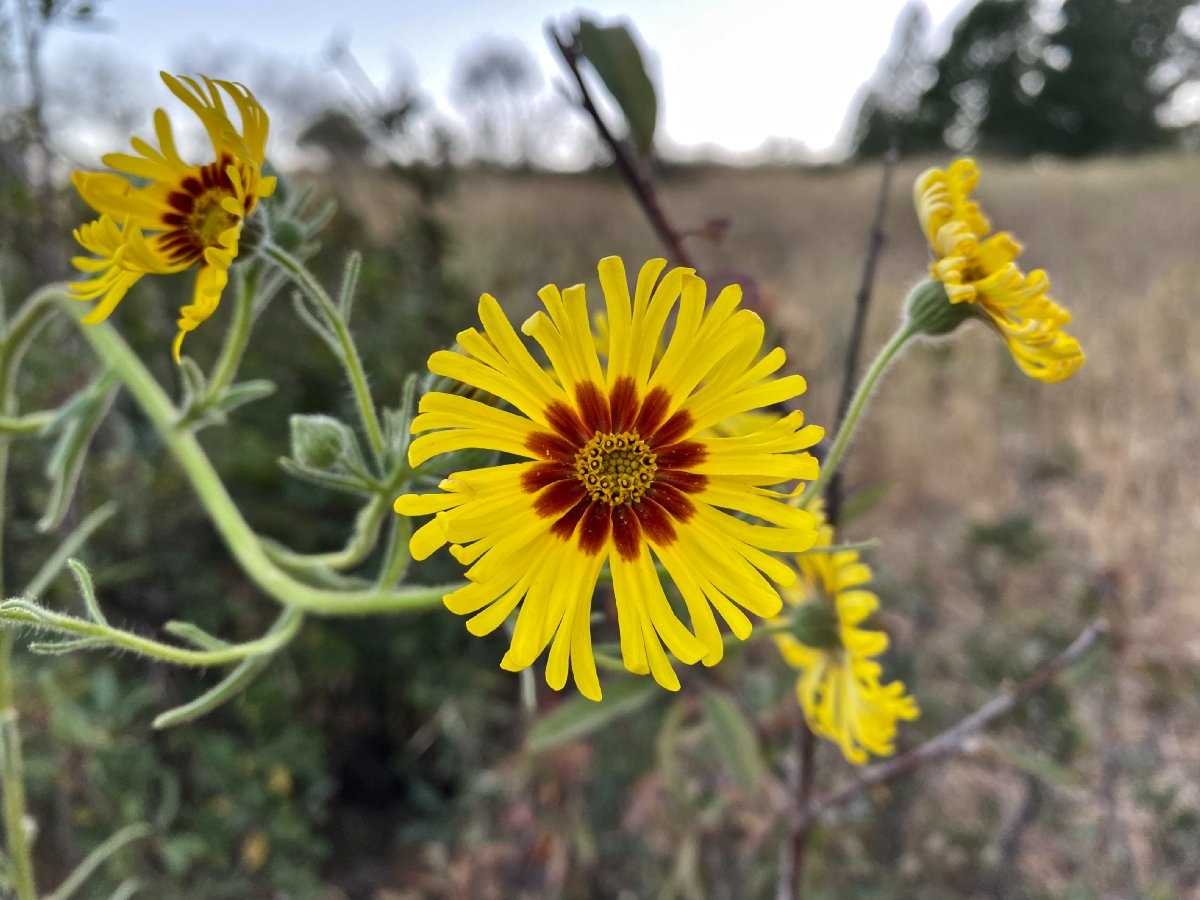
This month’s featured native: Common tarweed (Madia elegans)
Late-blooming natives in the aster family don’t stop with last month’s featured plant! The local flora includes two native tarweed species; this month, we’ll look at common tarweed (the showier of the two). This easy-to-grow annual reaches 0.6 m (2 ft), with cheery yellow blooms–often featuring a contrasting ring of red or maroon in the center–appearing anywhere from April to November. These will often close up during the heat of the day, re-opening in the cool evening and overnight. The pale green leaves are up to 20 cm (8 in) long, and–like the stem–covered in sticky hairs; this, along with their fragrance, gives the plant its common name. Common tarweed will readily self-seed if planted in a favorable location; its seeds (called “achenes”) are also a traditional food of Native peoples.
Common tarweed prefers well-drained soil and sunny, open areas. It requires very little care, so it’s a great plant for a forgotten/hard-to-access corner of the garden that can be “left wild;” you can encourage longer bloom time with light watering and removing the spent flowers. It can be found in a variety of habitats, including dry, open forests, disturbed areas, and grasslands.
Common tarweed is pollinated by adult butterflies, bumblebees, and other native insects. These creatures will thank you for giving them a late-season nectar source!