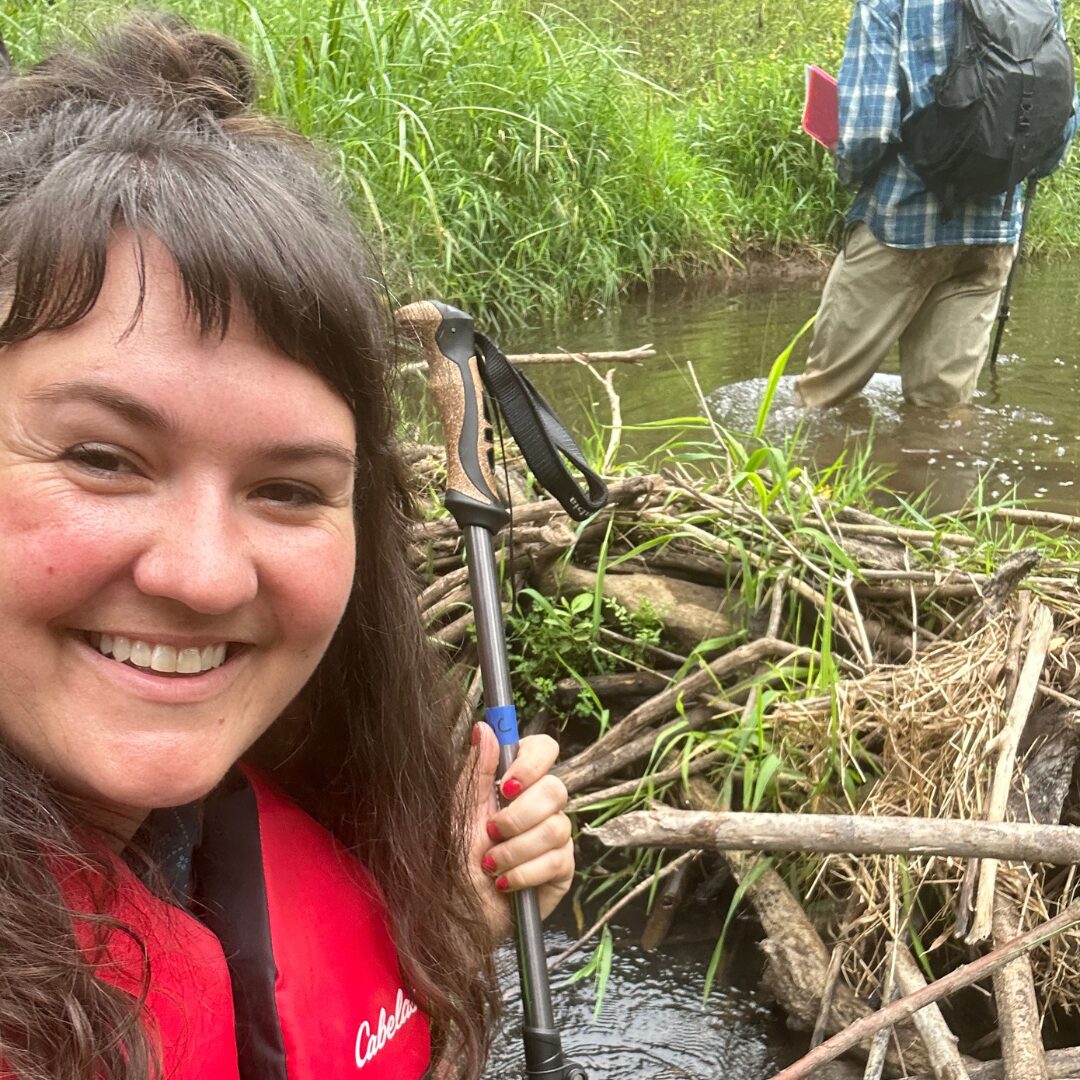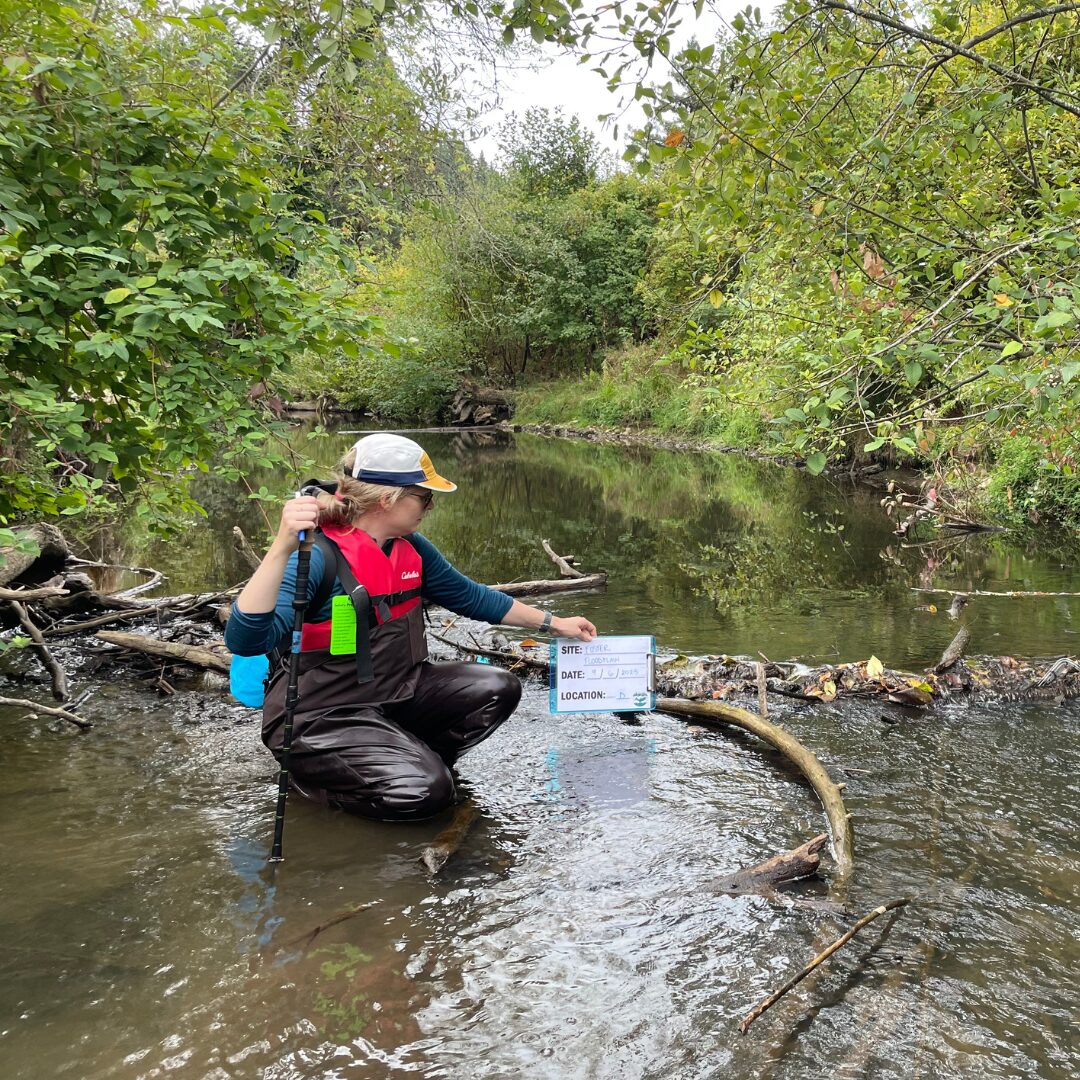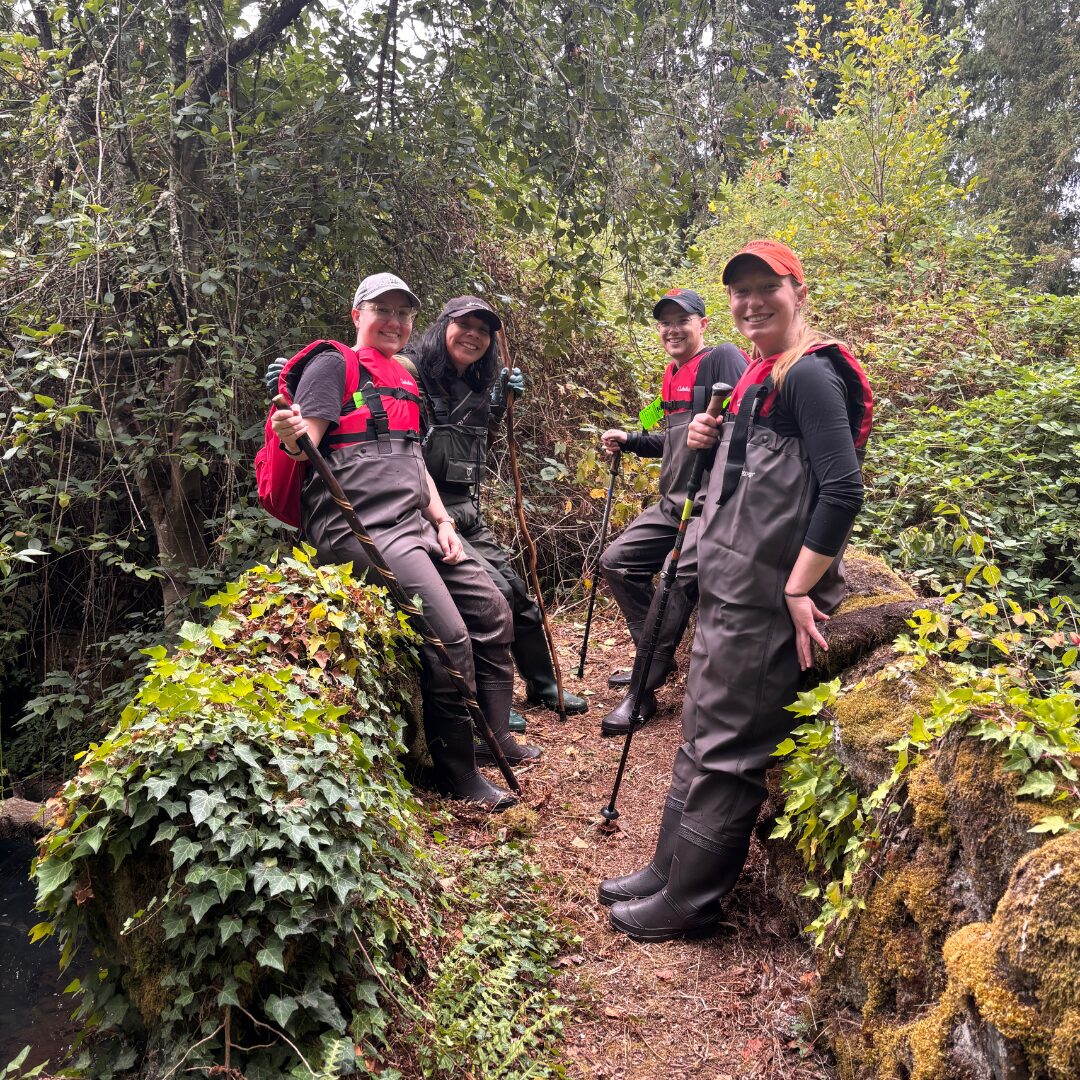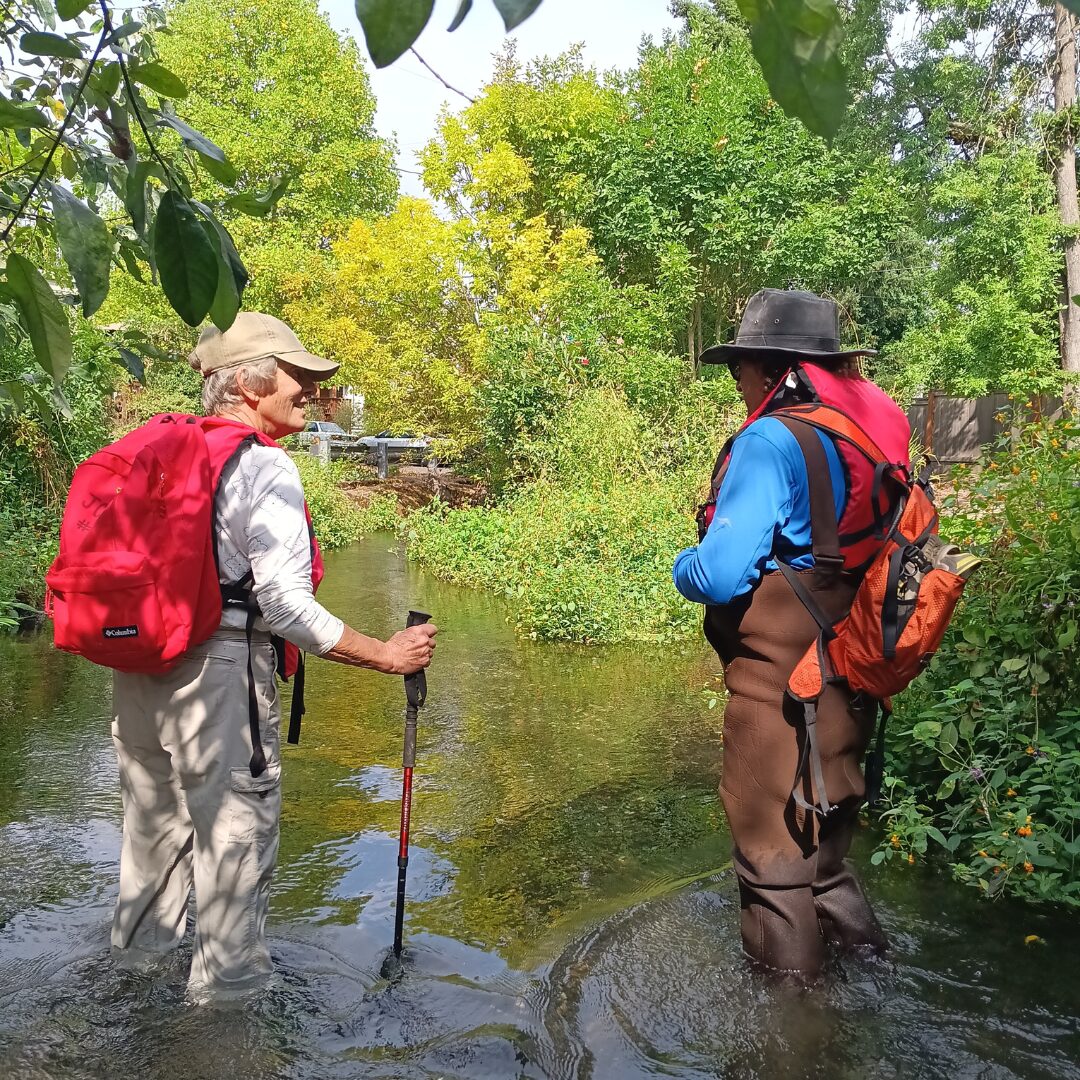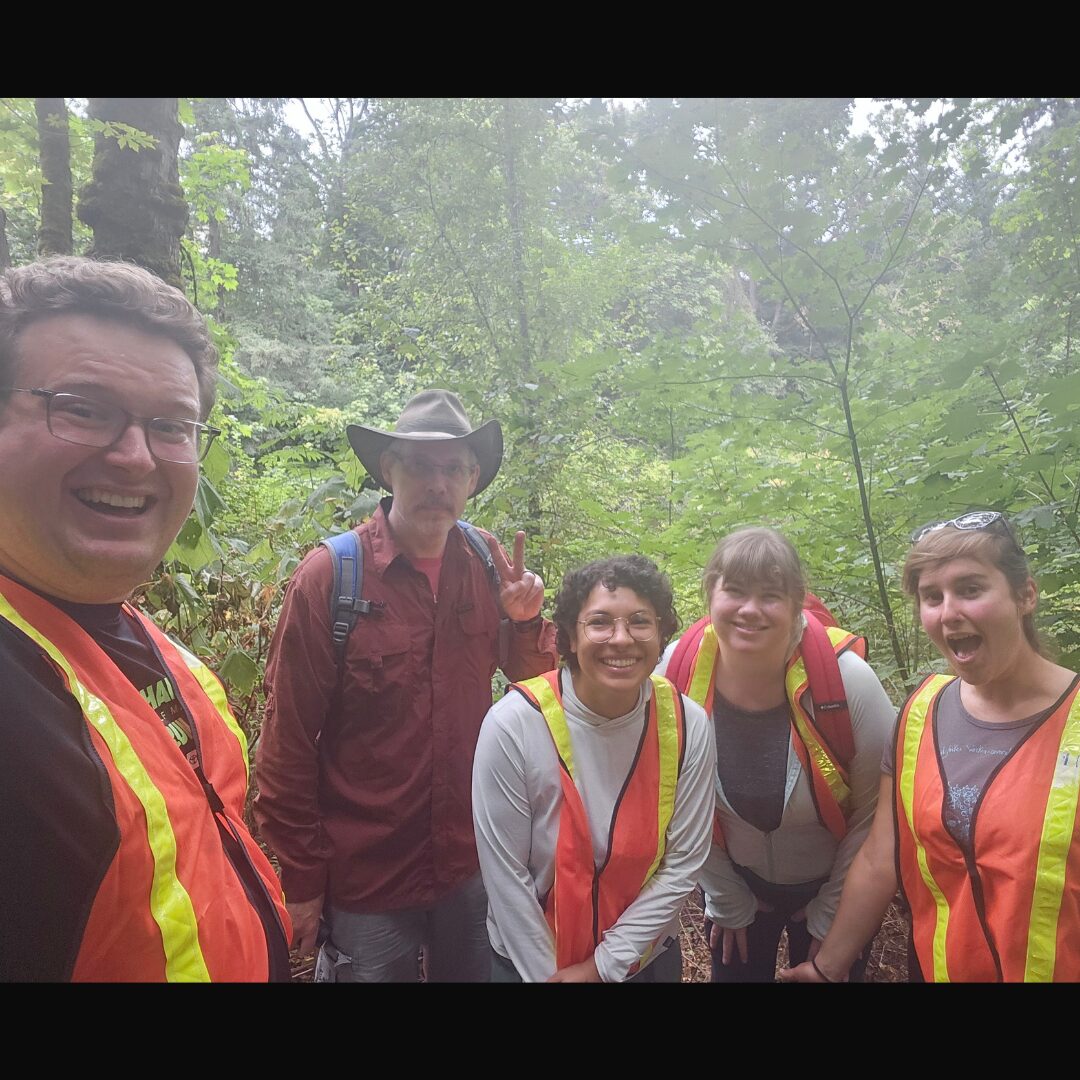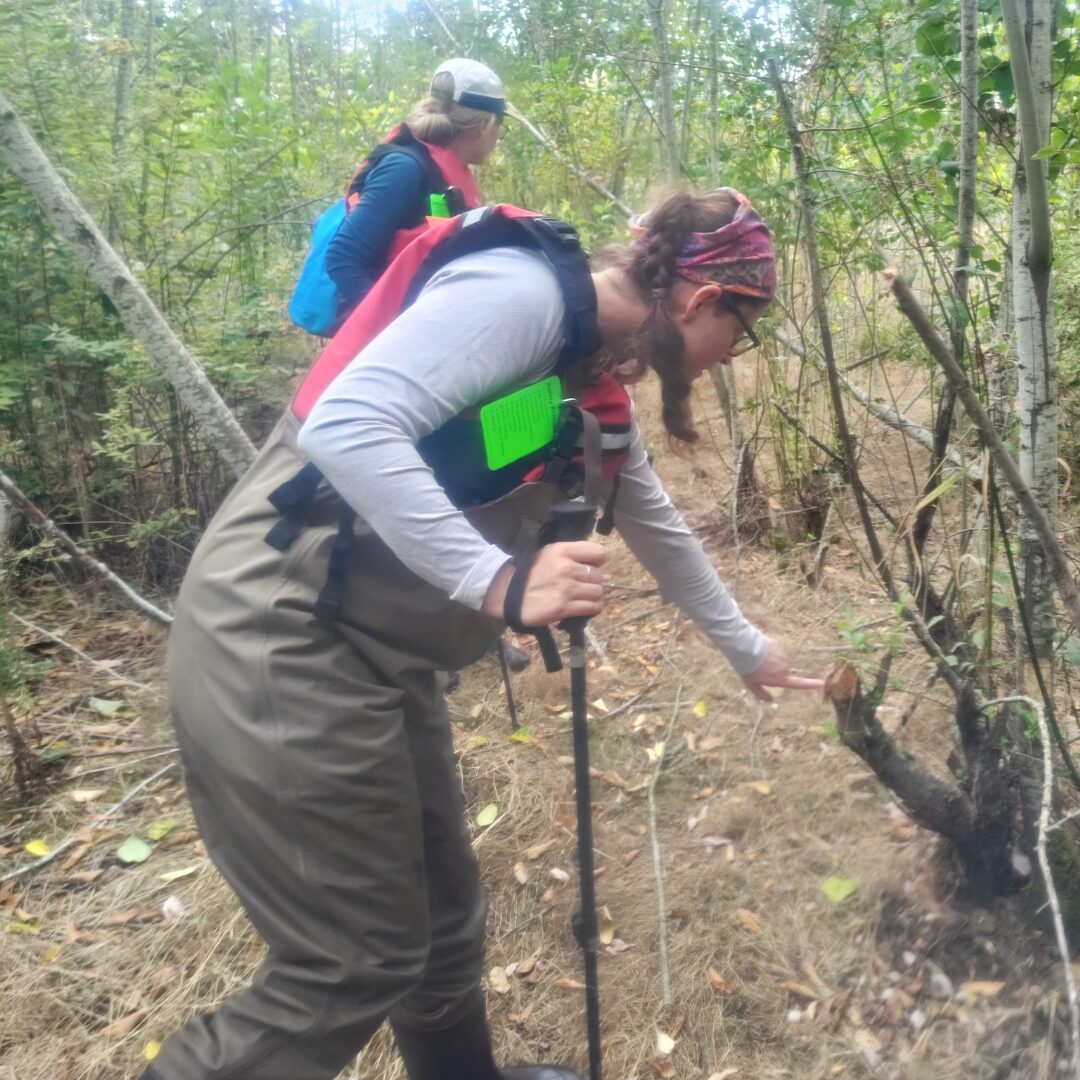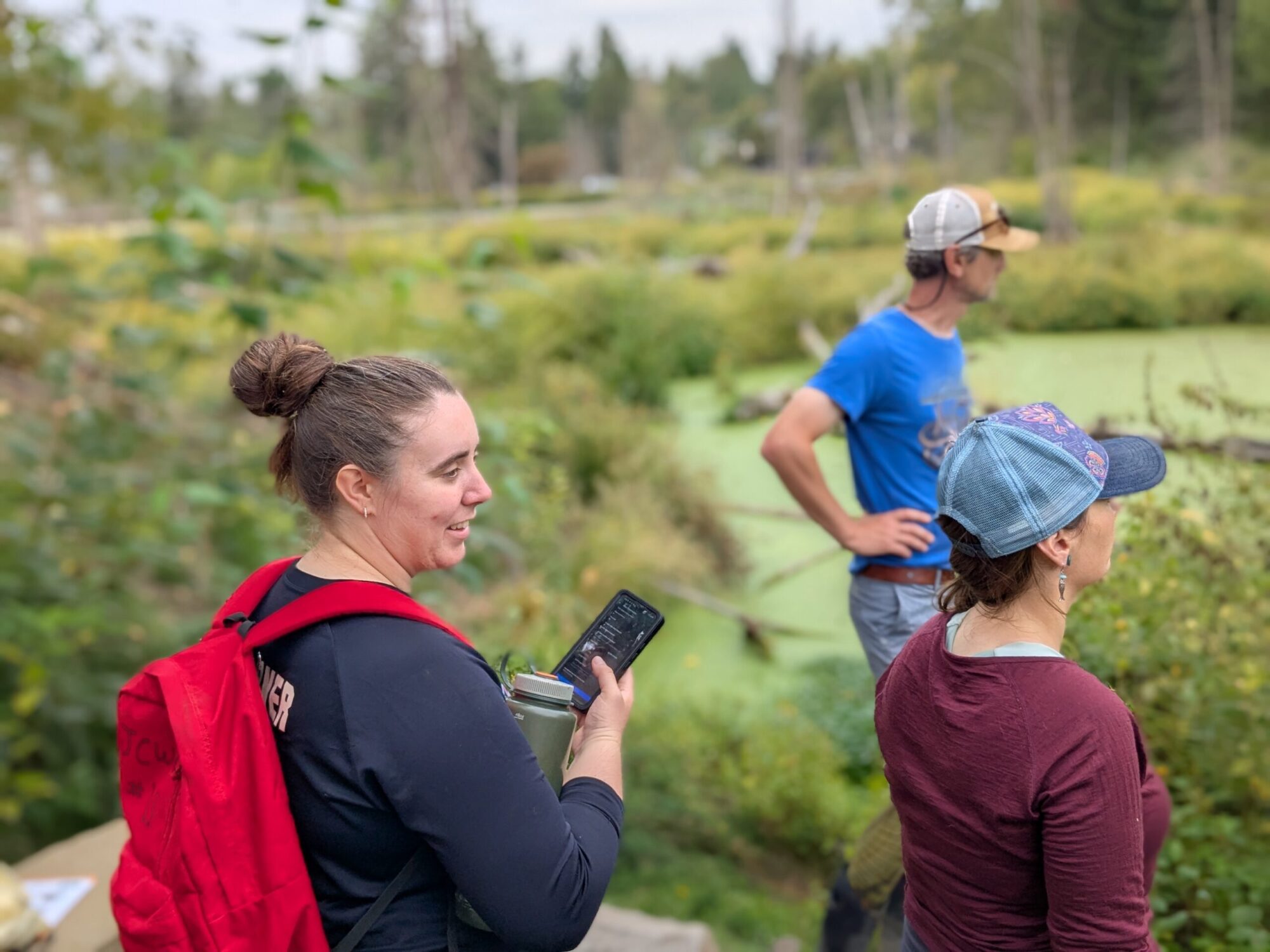
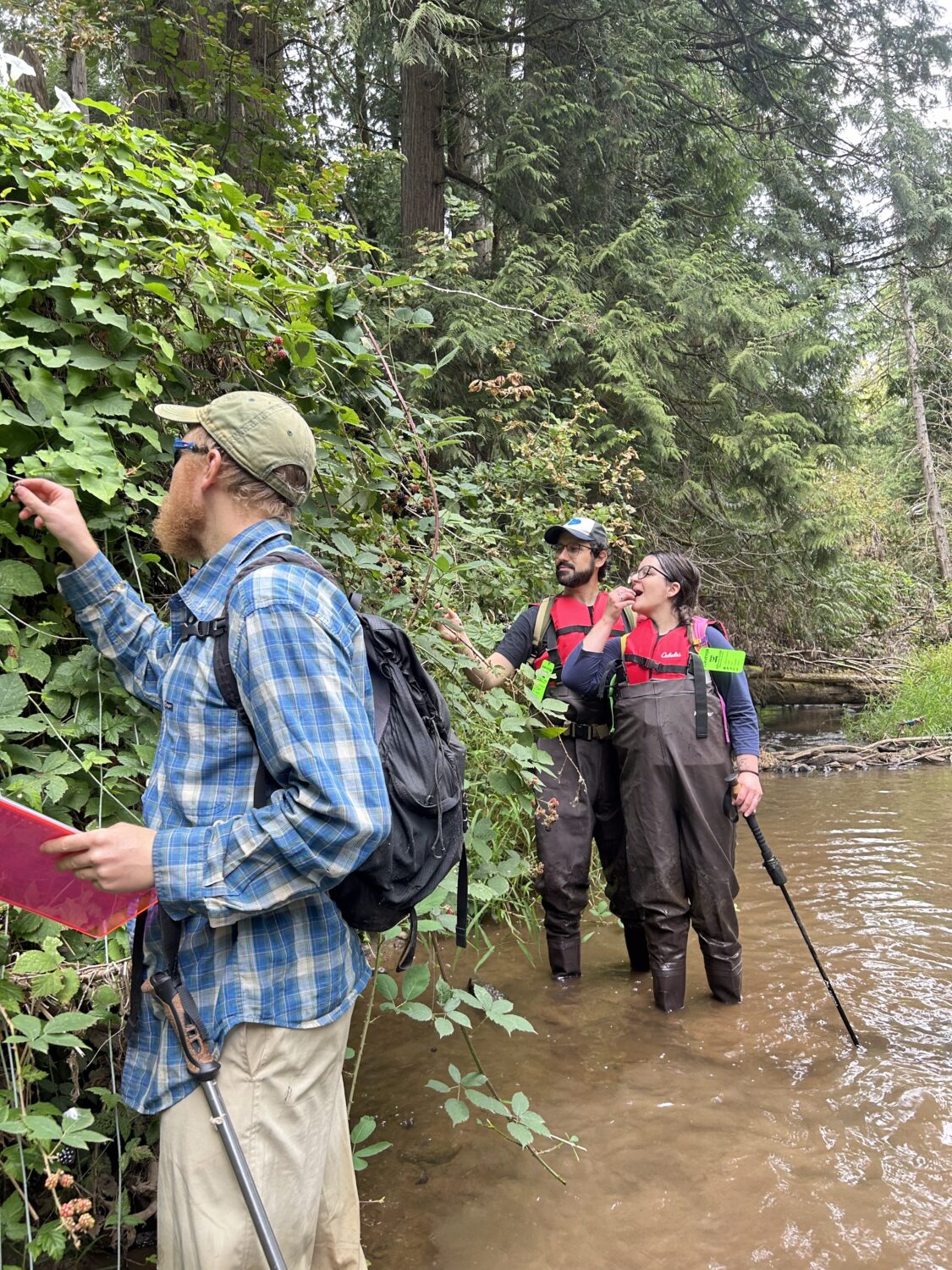
Over the log and through the creek to Beaver’s house we went. During this year’s beaver surveys, some sites had surveyors scrambling over brush and logs, giggling as they slipped into the water, and stopping for berries along the way. Each year around September, teams of surveyors spread throughout the watershed in search of beaver activity. Dams and lodges are recorded on Anecdata with activity such as beaver chews, slides, or scent mounts noted. All of this work without seeing an actual beaver!
North American beavers are one of two large rodent beaver species worldwide – the other is the slightly smaller Eurasian beaver. Beavers in general are crepuscular, meaning they are most active between dawn and dusk, which is why we don’t see them during our daytime surveys. Even during the twilight hours, it’s hard to spot and correctly ID them. It’s easy to confuse them with a nutria, since they both thrive in similar environments. If you see a large rodent during the day, it’s probably a nutria. If you see one at dawn or dusk, look at the whiskers. Nutria have long white whiskers while beaver whiskers are darker in color and short.
While you might not spot a beaver, you can often tell that they are in the area. As an expert, wetland ecosystem engineer, beavers are great at building ponded areas that support many species and create firebreaks along with water storage and filtration systems that improve drought and flood resilience. A beaver pond will typically be surrounded by nibbled trees and vegetation that camouflages them when collecting wood and sliding back into the pond. Dams will span the width of the body of water from a couple of feet to over a hundred feet. We survey the condition of the dam by recording the water flow. Is a slight trickle of water going over the dam or through it – it’s probably an active dam or is it an older dam that allows a lot of water to flow through?
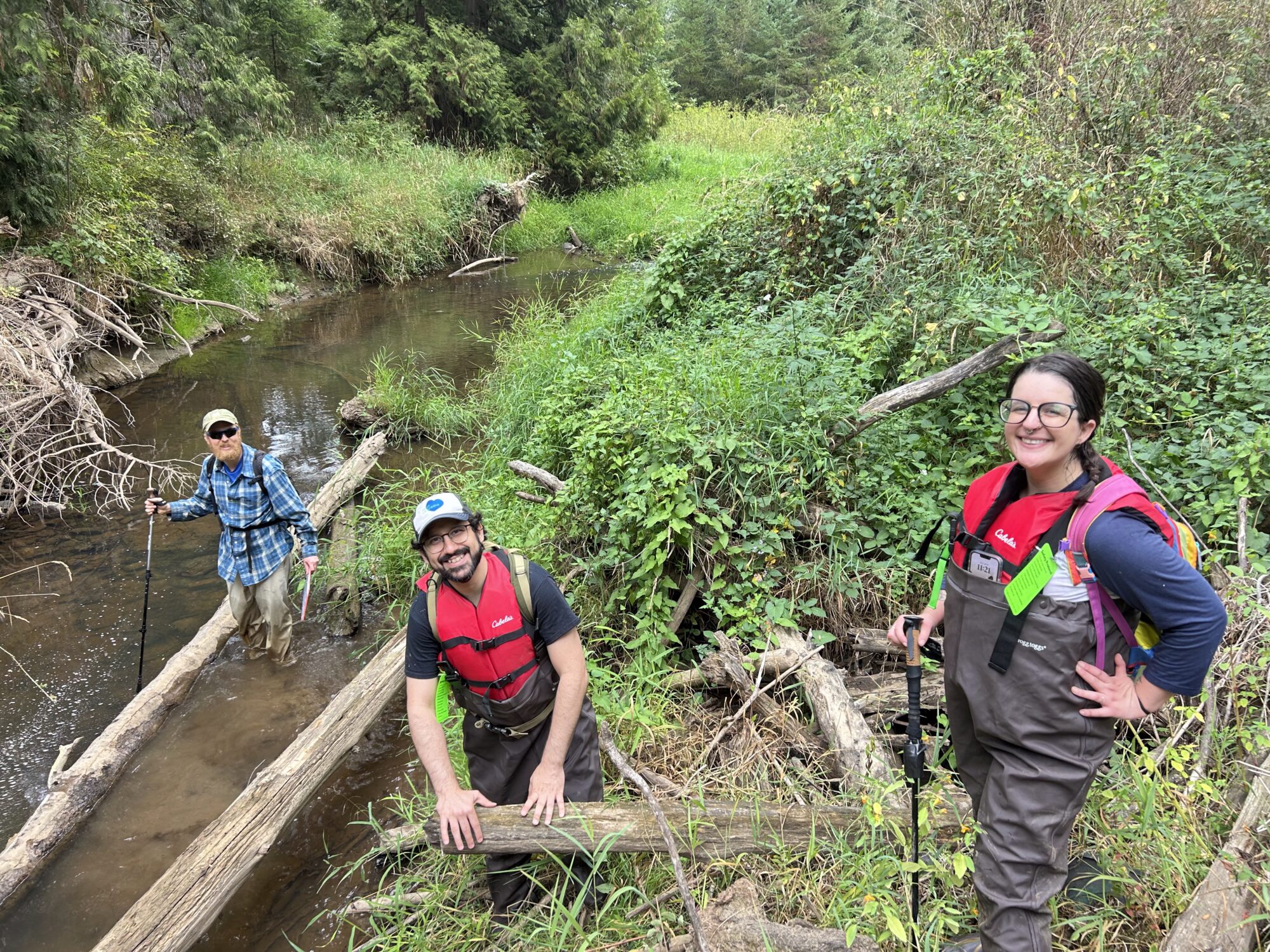
This year surveyors spotted over 60 dams in the Johnson Creek watershed! The increase in habitat has produced much needed diversity within the creek for salmon and other species. The ponding that occurs from the dams has deeper, calmer water that can pull coolness from the bottom substrate. This cooler water is beneficial for salmon during all stages. The slower water also helps to stabilize the soil and reduce erosion in the riparian areas, especially during high rain events. The vegetation that grows at the edge of the water and on the banks help protect vulnerable species such as young salmon, macro invertebrates, and amphibians.
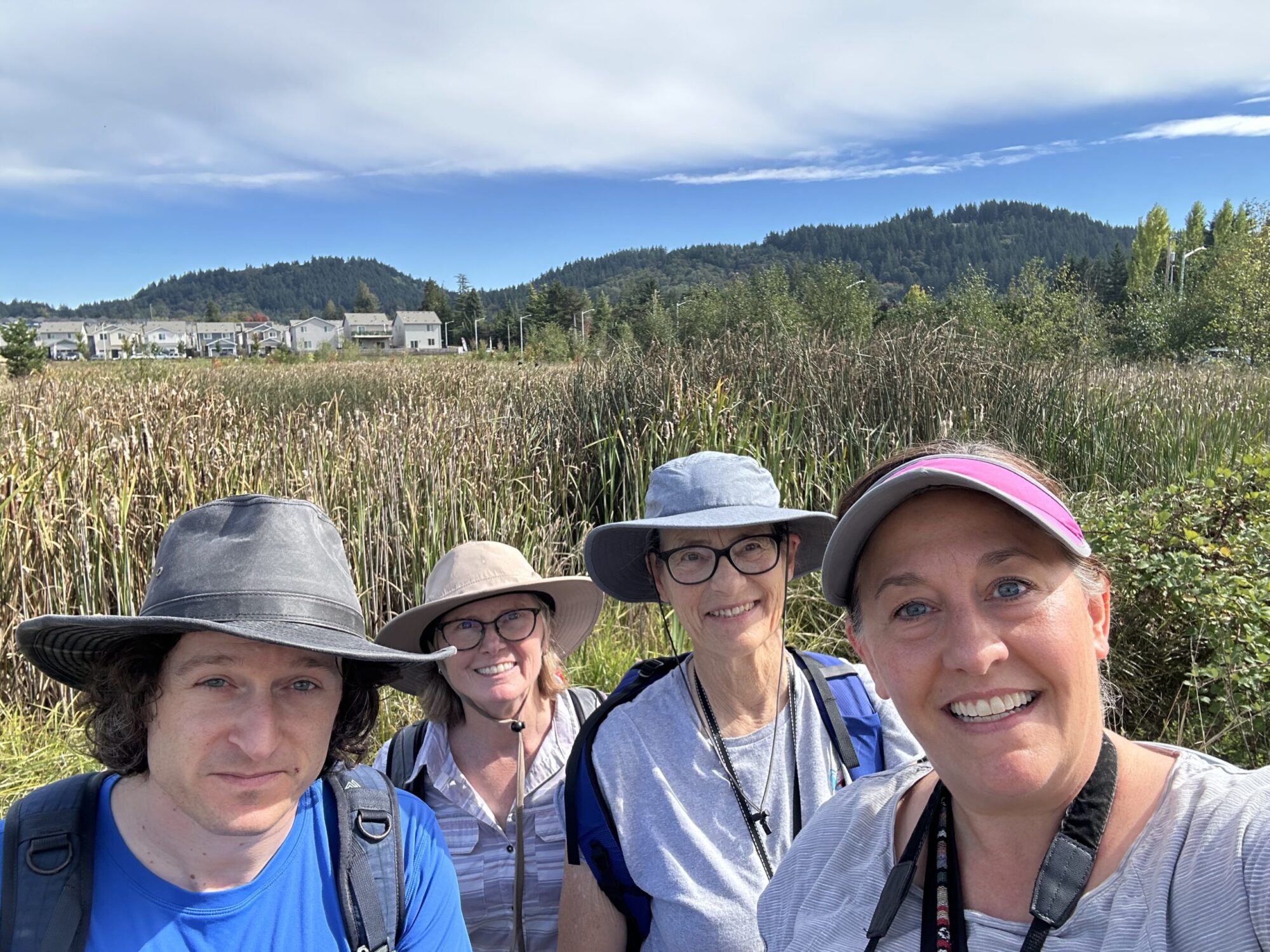
Thank you for protecting and advocating for beaver safety and for the many surveyors that brave the terrain to collect data each year. To get involved with our survey program email sara@jcwc.org and sign up at the bottom of our home page for our monthly eNewsletter.