This month’s featured native: licorice fern (Polypodium glycyrrhiza)
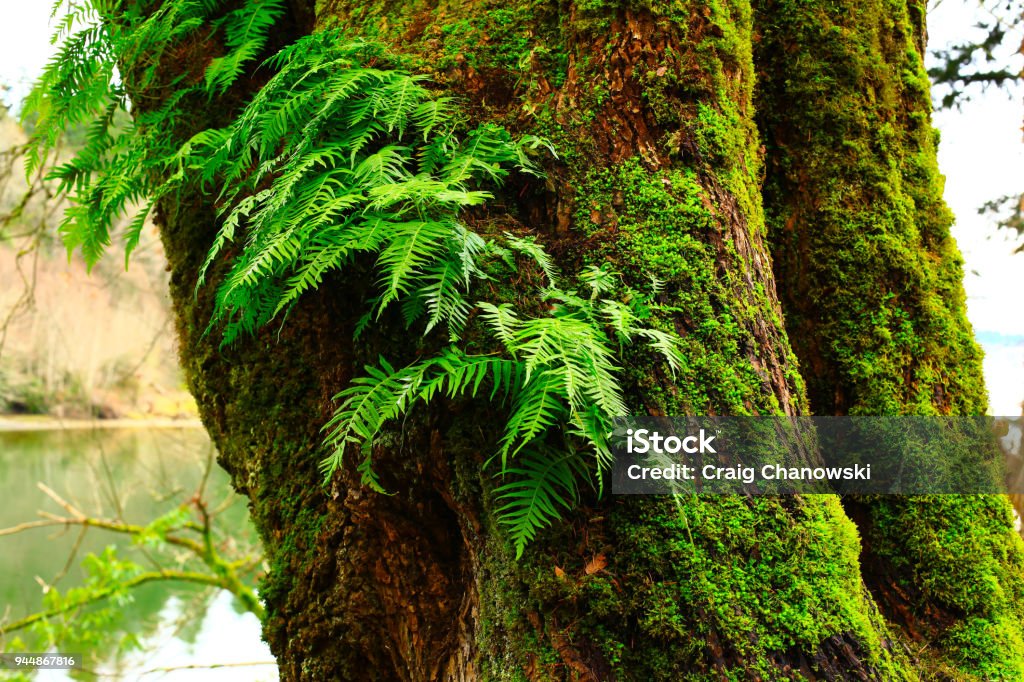
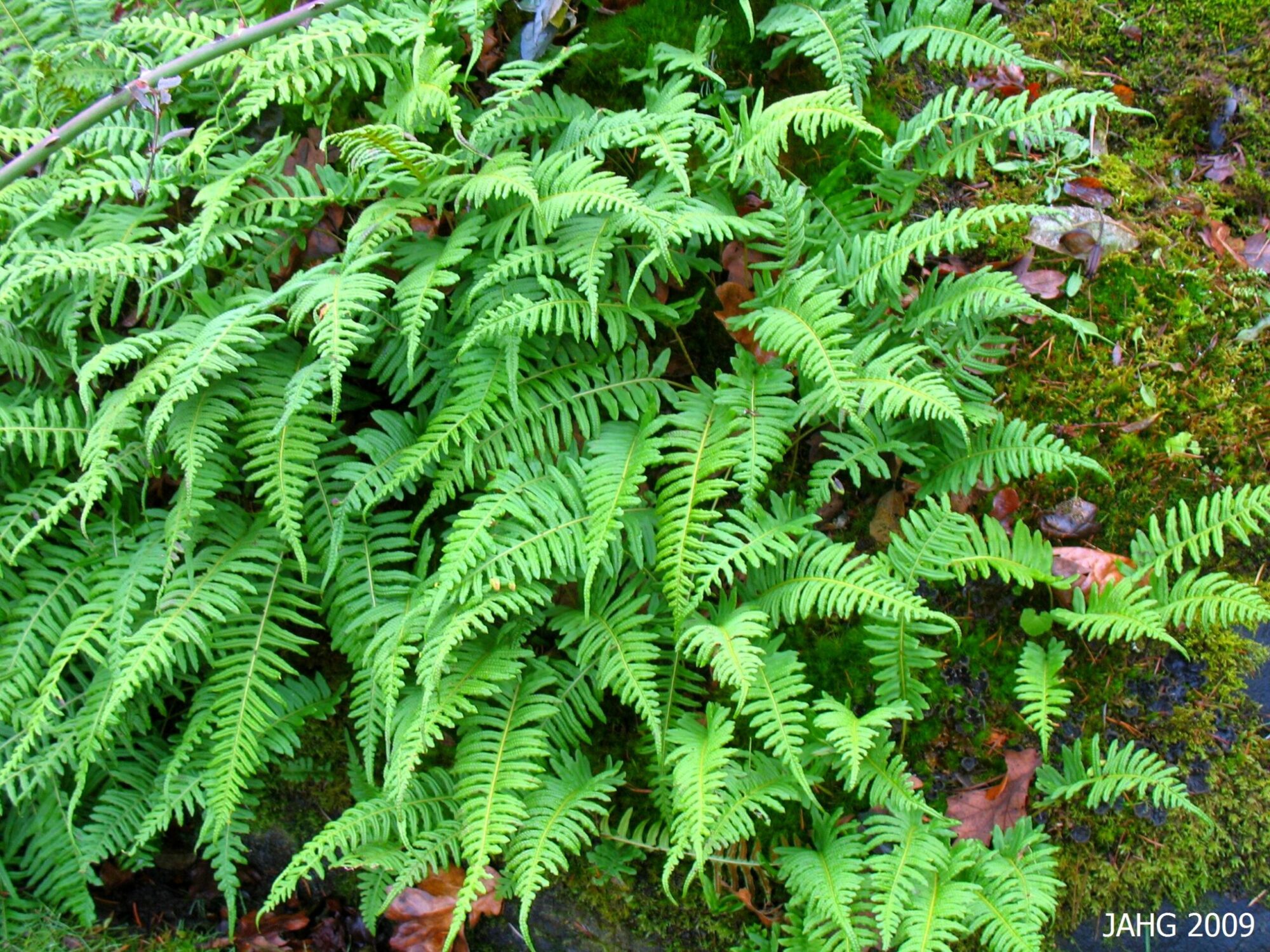
This month, our vegetal spotlight shines mainly on the trunks of trees, which are the chief domain of our region’s lone epiphytic fern species. Licorice fern can also be found on the ground–especially where it is moss-covered–or on logs and rocks, but it tends to favor the mossy boles and branches of (mainly) deciduous trees, with a particular fondness for bigleaf maple (Acer macrophyllum). Its evergreen fronds may reach as much as 70 cm (27″) in height, though it is usually quite a bit smaller; these emerge from a reddish-brown, scaly rhizome, whose flavor when chewed gives the plant its common name. They are at their showiest during the cool, wet months, curling into frizzled (but still living), papery tissue in summer’s heat.
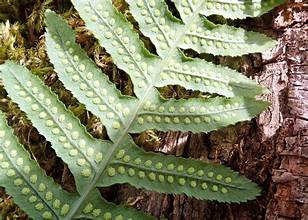
Fern fronds consist of a stalk (the “stipe”) and the leafy portion (the “blade”); blades on licorice fern are up to 50 cm (20″) long, with once-pinnate leaflets (single, staggered along the stipe) generally longer than 3 cm (a bit over an inch). They have finely scalloped or toothed margins and pointed tips. Spore cases (“sori”), found on the undersides of the leaflets, are oval to round, arranged in single rows to either side of the main vein of the leaflet, and do not have a protective coating (“insidium”).
Many native peoples have chewed the sweet rhizomes for flavor and medicine, raw or prepared in various ways. Likewise, various herbivorous mammals and insects eat licorice fern, and its growth provides nesting habitat and conserves moisture. Though it dries up in summer, it actually prefers moist to dry conditions with at least some sun exposure.