
Long-time followers of JCWC may remember a project we did on a property owned by the Centennial School District, where Mitchell Creek once had an inline impoundment created by an old race track. Two fish-impassable culverts created a wide, shallow backwater that was heating the water in the stream up by as much as 14 degrees Celsius (25 deg. F)! The Council was able to remove the culverts, create a new channel for the creek, and revegetate the area with native species in summer of 2019. So, what was the result of these efforts?
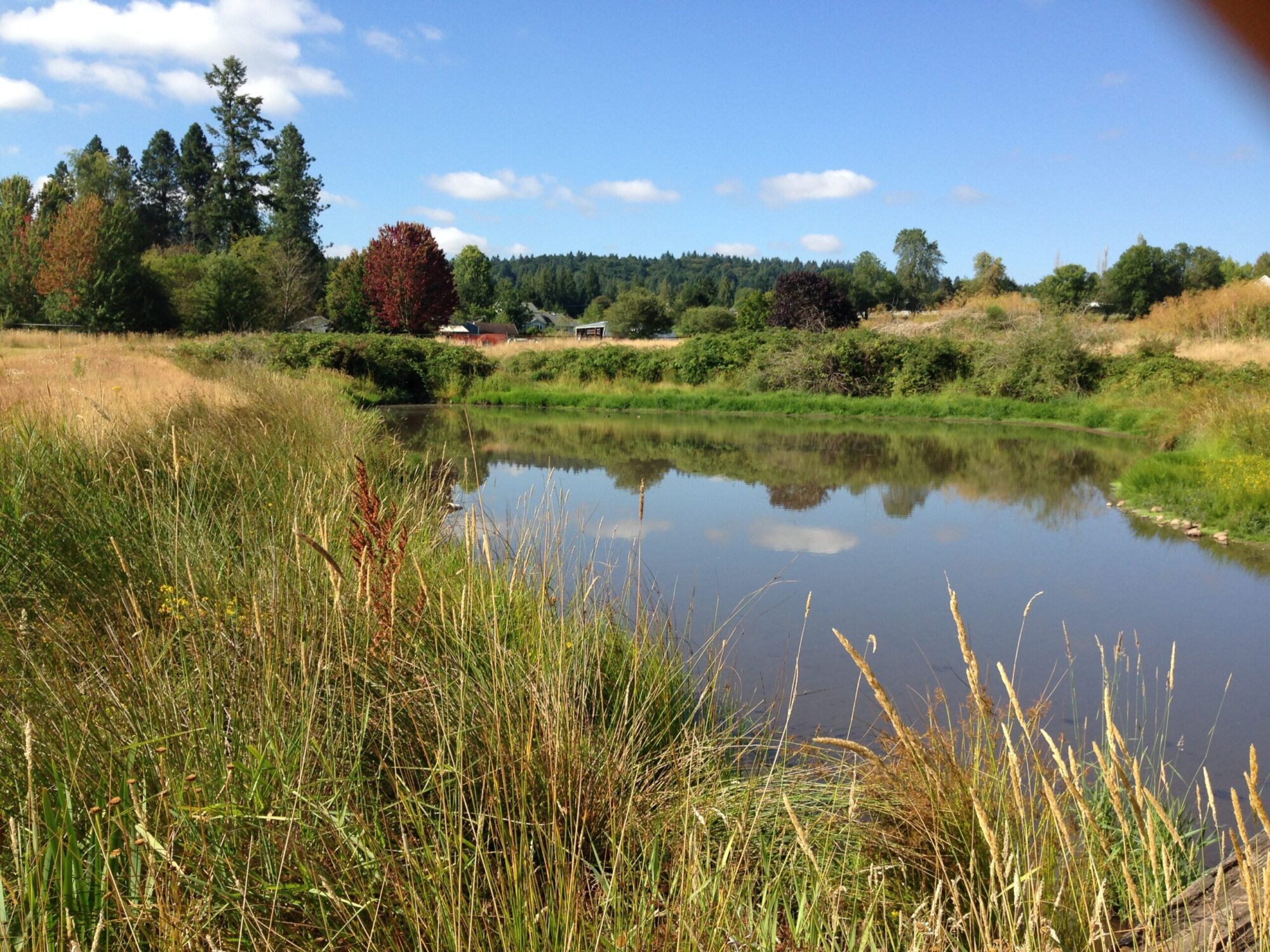
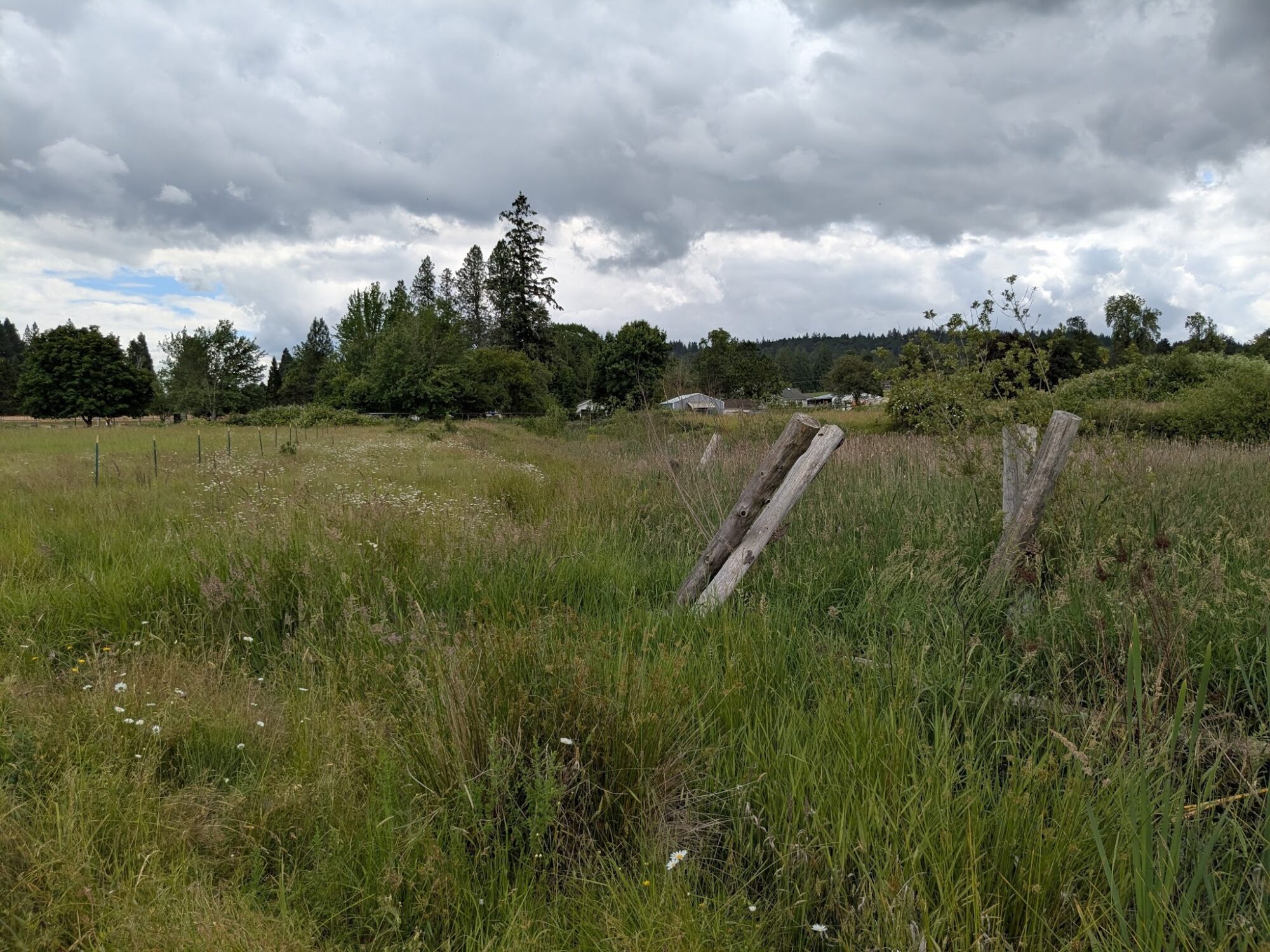
We put data loggers in upstream and downstream of the project, as well as in the middle of the old footprint, to monitor stream temperature from late spring to fall. This gave us seven years of data to assess the impact of the project on stream warming. Meanwhile, we began eDNA sampling at the site in fall 2020, after completing another project to remove a dam on Kelley Creek that blocked fish passage (Mitchell Creek joins Kelley above where that dam was). This allows us to know whether salmonids are reaching and using the project area.
For the first two years after the project, stream temperatures were still higher below the former impoundment than above it, though not by nearly as much. From 2022 on, temperatures at the bottom of the new channel within the project footprint have been consistently below the temperature of the stream coming onto the property. In fall 2023, we got our first detection of cutthroat trout at the upstream end of the project, and they’ve been there each time we’ve sampled since. In 2024, mid-project temperatures were below the rearing standard for salmonids for much of the monitoring period; that year, we detected rainbow trout DNA both upstream and downstream of the project. By 2025, the temperature of the stream below the project was only 1.2 degrees Celsius warmer than the stream coming onto the property, and the temperature at the bottom of the channel mid-project was below the rearing standard for the entire summer! And, in the fall of that year, we detected coho salmon at the downstream end. Seven years after completing the project, this site has gone from thermal trap to cold-water refugia used by multiple salmonid species!