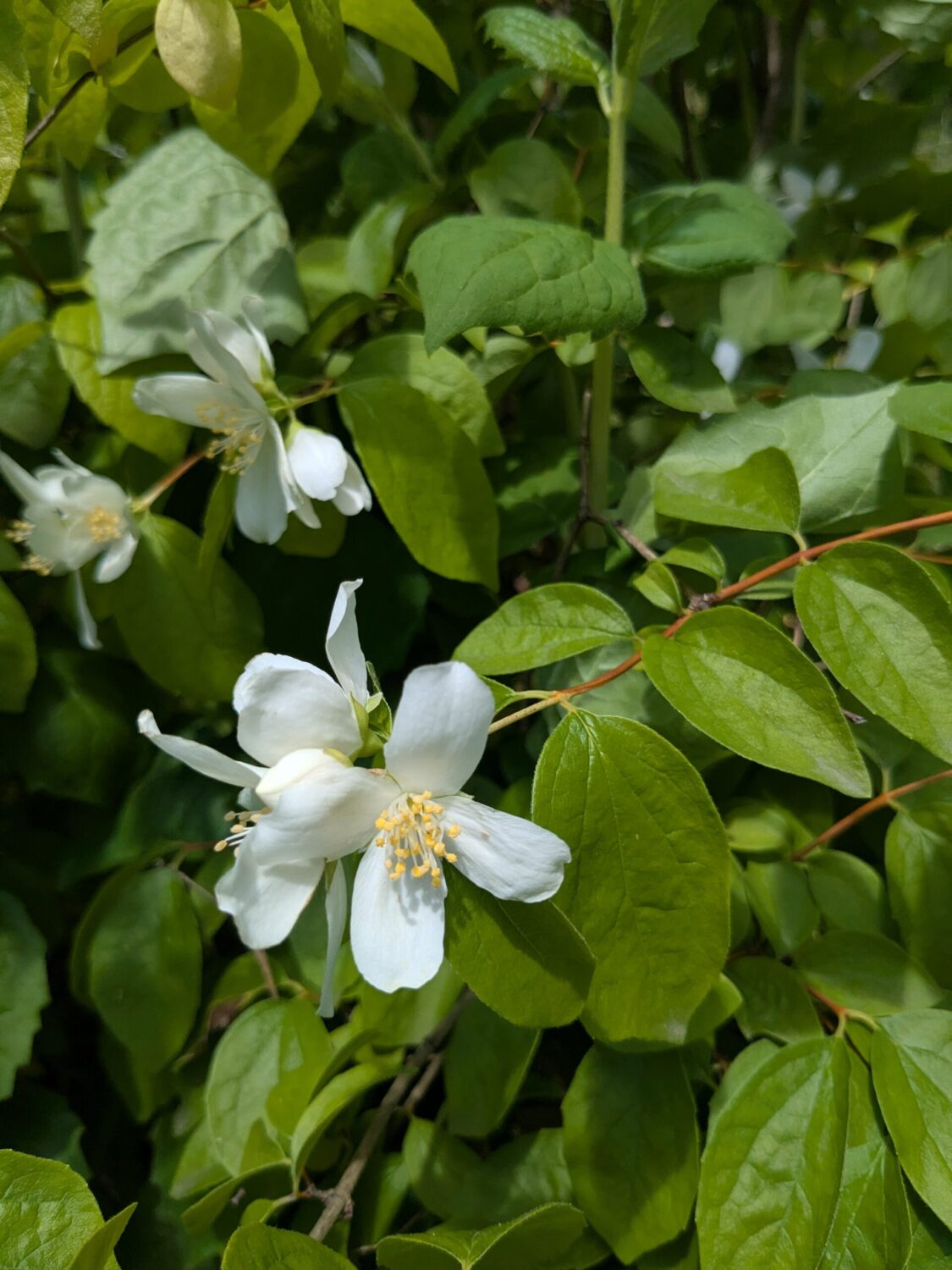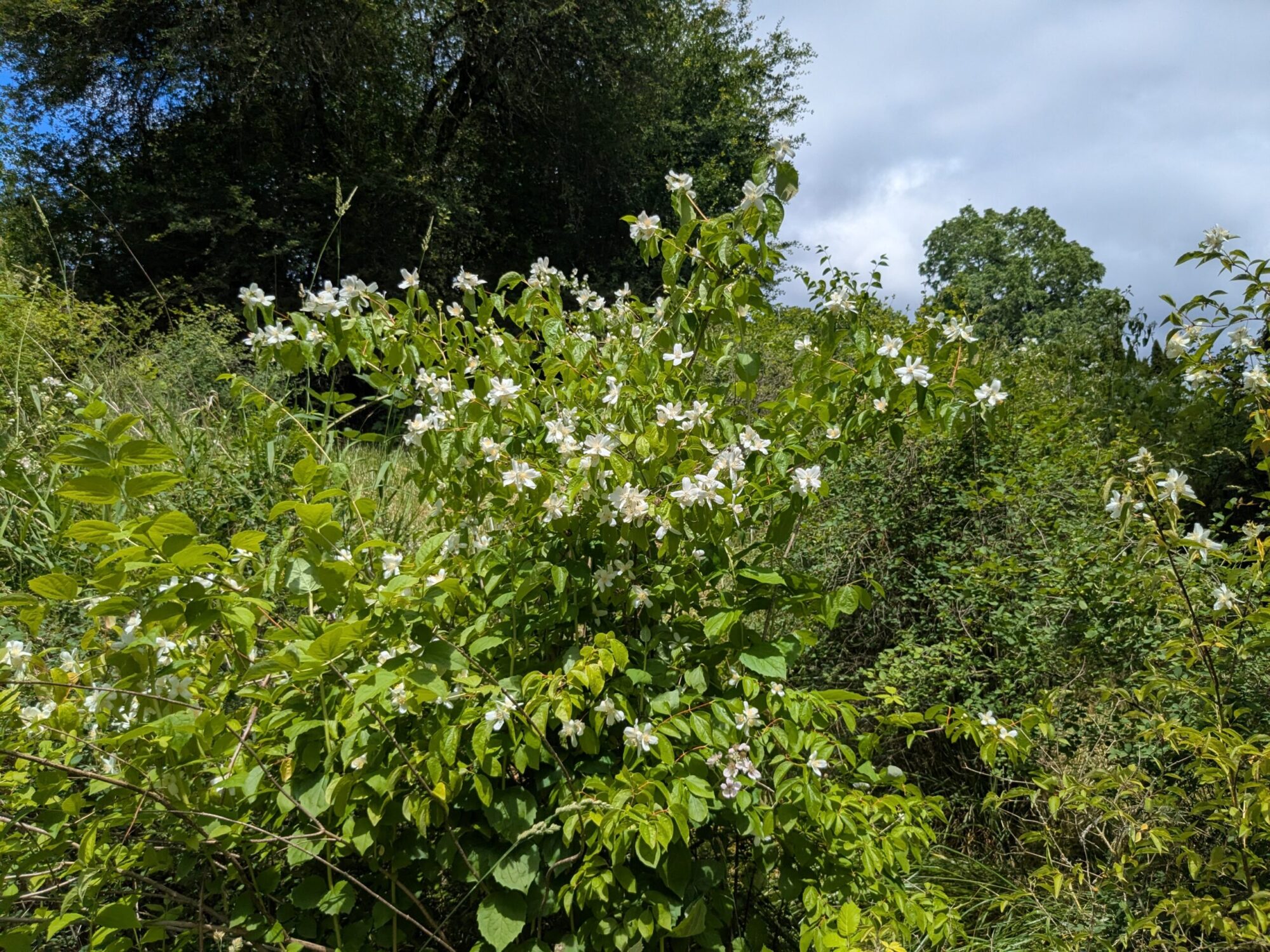
Between its showy, white blossoms and intoxicating scent, our featured native has certainly earned the name mock orange (Philadelphus lewisii). A tall shrub in the same family with hydrangeas, mock orange typically ranges from 1.5 – 4 m (5-14 ft) in height. The opposite, egg-shaped leaves are coarsely toothed, 2 – 9 cm (1-4 in) long and slightly less wide. The native variety produces simple, four-petaled flowers about 4 cm (< 2 in) across; some cultivated varieties have double flowers. These appear from May to July in our area, and produce a thoroughly pleasing aroma when the weather is warm and dry (extreme heat or rain can reduce production of the volatile oils that make the smell).
Mock orange will grow best in full to part sun, but can tolerate some shade; you just won’t get as many flowers. The plant does demand well-drained soil, regardless of light conditions, and is very drought-tolerant. It is native to western North America from British Columbia south to northern California, ranging eastward to Alberta and western Montana. Mock orange grows in a wide variety of habitats, including open woodlands, conifer forests, rocky slopes, and even sagebrush deserts. It provides excellent soil stabilization and erosion control.
Mock orange provides a huge range of wildlife benefits. The flowers provide nectar for nocturnal moths, adult butterflies, bees, syrphid flies, and other insect pollinators. Its seeds are food for many species of birds and small mammals, particularly quail and squirrels, while its branches and twigs are quality browse for deer and elk, and provide cover year round for birds and small mammals. The overall plant attracts and supports beneficial and pest-eating insects and is a caterpillar host plant and larval food source for native moths and butterflies. We’re not the only ones who find this plant alluring!